October 25, 2012

A freeze frame shot is used when one shot is printed in a single frame several times, in order to make an interesting illusion of a still photograph.
‘Freeze frame’ is also a drama medium term used in which, during a live performance, the actors/actresses will freeze at a particular, pre-meditated time, to enhance a particular scene, or to show an important moment in the play/production like a celebration. The image can then be further enhanced by spoken word, in which each character tells their personal thoughts regarding the situation, giving the audience further insight into the meaning, plot or hidden story of the play/production/scene. This is known as ‘thought tracking,’ another Drama Medium (e.g. costumes).
read more »
Posted in Art, Technology |
Leave a Comment »
October 24, 2012

The orgasmatron is a fictional device that appears in the 1973 movie ‘Sleeper,’ which also shows the effects of a related device, an orgasmic orb. Similar devices have appeared in other fictional works. The term has also been applied to a non-fictional device capable of triggering an orgasm-like sensation using electrodes implanted at the lower spine. Author Christopher Turner has suggested that the orgasmatron was a parody of Wilhelm Reich’s ‘orgone accumulator,’ a device which claims to concentrate ‘orgone,’ a bioenergy theorized by Reich.
The orgasmatron is a fictional device in the fictional future society of 2173 in the Woody Allen movie ‘Sleeper.’ It is a large cylinder big enough to contain one or two people. The orgasmatron was made by decorating an elevator in the home where the movie was filmed. Once entered, it contains some (otherwise undescribed) future technology that rapidly induces orgasms. This is required, as almost all people in the ‘Sleeper’ universe are impotent or frigid, although males of Italian descent are considered the least impotent of all groups.
read more »
Posted in Humor, Sex, Technology |
Leave a Comment »
October 22, 2012

In photography and cinematography, a multiple exposure is the superimposition of two or more exposures to create a single image, and double exposure has a corresponding meaning in respect of two images. The exposure values may or may not be identical to each other. Ordinarily, cameras have a sensitivity to light that is a function of time. For example, a one second exposure is an exposure in which the camera image is equally responsive to light over the exposure time of one second. The criterion for determining that something is a double exposure is that the sensitivity goes up and then back down.
The simplest example of a multiple exposure is a double exposure without flash, i.e. two partial exposures are made and then combined into one complete exposure. Some single exposures, such as ‘flash and blur’ use a combination of electronic flash and ambient exposure. Multiple exposures are sometimes used as an artistic visual effect or to create ghostly images (it is frequently used in photographic hoaxes).
Posted in Art, Technology |
2 Comments »
October 21, 2012
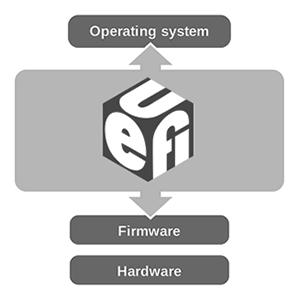
The Unified Extensible Firmware Interface (UEFI) is a specification that defines a software interface between an operating system and platform firmware. UEFI is meant as a replacement for the Basic Input/Output System (BIOS) firmware interface, present in all IBM PC-compatible personal computers. In practice, most UEFI images have legacy support for BIOS services.
It can be used to allow remote diagnostics and repair of computers, even without another operating system. The original EFI (Extensible Firmware Interface) specification was developed by Intel. Some of its practices and data formats mirror ones from Windows. The BIOS is limited to a 16-bit processor mode and 1 MB of addressable space due to the design being based on the IBM 5150 which used the 16-bit Intel 8088. In comparison, the UEFI processor mode can be either 32-bit (x86-32, ARM) or 64-bit (x86-64 and Itanium).
read more »
Posted in Money, Politics, Technology |
Leave a Comment »
October 21, 2012

Sociocybernetics is an independent chapter of science in sociology based upon Systems Theory (a framework to analyze a group of objects that work in concert to produce some result) and cybernetics (the study of control and communication systems in animals and machines). It also has a basis in Organizational Development (OD) consultancy practice and in Theories of Communication, theories of psychotherapies, and computer sciences. The ‘International Sociological Association’ has a specialist research committee in the area, which publishes the (electronic) ‘Journal of Sociocybernetics.’
The study of society as a system can be traced back to the origin of sociology when the emergent idea of functional differentiation was applied for the first time to society by Auguste Comte. From his viewpoint, the principal feature of modern society was the increased process of system differentiation as a way of dealing with the complexity of the environment. This is accomplished through the creation of subsystems in an effort to copy within a system the difference between it and the environment.
read more »
Posted in Politics, Science, Technology |
Leave a Comment »
October 21, 2012

‘Cognitive Surplus: Creativity and Generosity in a Connected Age’ is a 2010 non-fiction book by Clay Shirky. The book is an indirect sequel to Shirky’s ‘Here Comes Everybody,’ which covered the impact of social media. The book’s central theme is that people are now learning how to use more constructively the free time afforded to them since the 1940s for creative acts rather than consumptive ones, particularly with the advent of online tools that allow new forms of collaboration.
It goes on to catalog the means and motives behind these new forms of cultural production, as well as key examples. While Shirky acknowledges that the activities that we use our cognitive surplus for may be frivolous (such as creating ‘LOLcats’), the trend as a whole is leading to valuable and influential new forms of human expression. He also asserts that even the most inane forms of creation and sharing are preferable to the hundreds of billions of hours spent consuming television.
read more »
Posted in Language, Money, Technology |
Leave a Comment »
October 21, 2012

‘Here Comes Everybody: The Power of Organizing Without Organizations’ is a 2008 book by Clay Shirky, which evaluates the effect of the Internet on modern group dynamics. The author considers examples such as ‘Wikipedia’ and ‘MySpace’ in his analysis, and says his book is about ‘what happens when people are given the tools to do things together, without needing traditional organizational structure.’
The title of the work alludes to ‘HCE,’ a recurring and central figure in James Joyce’s ‘Finnegans Wake.’ In the book, Shirky recounts how social tools such as blogging software like WordPress and Twitter, file sharing platforms like Flickr, and online collaboration platforms like Wikipedia support group conversation and group action in a way that previously could only be achieved through institutions.
read more »
Posted in Language, Technology |
Leave a Comment »
October 18, 2012

Cheating in video games involves a player using non-standard methods for creating an advantage beyond normal gameplay, usually to make the game easier. Cheats sometimes may take the form of ‘secrets’ placed by game developers themselves. Cheats may be activated from within the game itself (‘cheat code’ implemented by the original game developers); or created by third-party software (‘game trainer’) or hardware (‘cheat cartridge’).
They can also be realized by exploiting software bugs. Cheating in video games has existed for almost their entire history. The first cheat codes were put in place for play testing purposes. Playtesters had to rigorously test the mechanics of a game and introduced cheat codes to make this process easier. An early cheat code can be found in ‘Manic Miner,’ where typing ‘6031769’ (based on developer Matthew Smith’s driving licence) enables the cheat mode.
read more »
Posted in Games, Humor, Technology |
Leave a Comment »
October 17, 2012

‘A Rape in Cyberspace, or How an Evil Clown, a Haitian Trickster Spirit, Two Wizards, and a Cast of Dozens Turned a Database into a Society’ is an article written by freelance journalist Julian Dibbell and first published in ‘The Village Voice in 1993.’ The article was later included in Dibbell’s book ‘My Tiny Life’ on his experience at LambdaMOO (a text-based online virtual reality system to which multiple users are connected at the same time).
Technology advocate Lawrence Lessig has said that his chance reading of Dibbell’s article was a key influence on his interest in the field. Sociologist David Trend called it ‘one of the most frequently cited essays about cloaked identity in cyberspace.’
read more »
Posted in Games, Sex, Technology |
Leave a Comment »
October 17, 2012

Virtual crime or in-game crime refers to a virtual criminal act that takes place in a massively multiplayer online game (MMOG), usually an MMORPG. The huge time and effort invested into such games can lead online ‘crime’ to spill over into real world crime, and even blur the distinctions between the two.
Some countries have introduced special police investigation units to cover such ‘virtual crimes.’ South Korea is one such country and looked into 22,000 cases in the first six months of 2003. Several interpretations of the term ‘virtual crime’ exist. Some legal scholars opt for a definition based on a report on what was the first prominent case, a ‘rape in cyberspace.’
read more »
Posted in Games, Politics, Technology |
Leave a Comment »
October 17, 2012
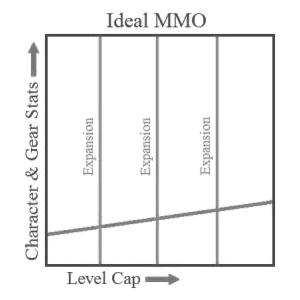
Mudflation, from MUD (multi-user dungeon) and inflation, is an economic issue that exists only in massively multiplayer online games. Mudflation occurs when future additions to (or even just continued operation of) a game causes previously acquired resources to decline in value. This can take many forms and have many causes, including new items introduced by an expansion pack, fundamental imbalances in the in-game economy, or even spread of information that allows a previously rare resource to be acquired more easily.
The term mudflation became popular during the height of the MMORPG EverQuest’s dominance, coming into common usage after the release of the ‘Ruins of Kunark’ (2000) expansion. The term originated many years prior with MUDs, the text based forerunner of MMORPGs, that also suffered from the same currency supply problems.
read more »
Posted in Games, Money, Technology |
1 Comment »
October 17, 2012

A virtual economy (or sometimes synthetic economy) is an emergent economy existing in a virtual persistent world, usually exchanging virtual goods in the context of an Internet game. People enter these virtual economies for recreation rather than necessity, which means that virtual economies lack the aspects of a real economy that are not considered to be ‘fun’ (for instance, players in a virtual economy often do not need to buy food in order to survive, and usually do not have any biological needs at all). However, some people do interact with virtual economies for ‘real’ economic benefit.
Virtual economies arise in numerous platforms. Multi-User Dungeons (MUDs) are text-based games that predate the World Wide Web. The largest virtual economies are in massively multi-player online role-playing games (MMORPGs). Virtual economies also exist in life simulation games which may have taken the most radical steps toward linking a virtual economy with the real world. For example, in ‘Second Life’ there is recognition of intellectual property rights for assets created ‘in-world’ by subscribers, and a laissez-faire policy on the buying and selling of ‘Linden Dollars’ (the world’s official currency) for real money on third party websites.
read more »
Posted in Games, Money, Technology |
Leave a Comment »



