April 11, 2012

‘Free Culture: How Big Media Uses Technology and the Law to Lock Down Culture and Control Creativity’ is a 2004 book by law professor Lawrence Lessig that was released on the Internet under the Creative Commons Attribution/Non-commercial license.
The book documents how copyright power has expanded substantially since 1974 in five critical dimensions: duration (from 32 to 95 years), scope (from publishers to virtually everyone), reach (to every view on a computer), control (including “derivative works” defined so broadly that virtually any new content could be sued by some copyright holder as a ‘derivative work’ of something), and concentration and integration of the media industry.
read more »
Posted in Money, Politics, Technology |
Leave a Comment »
April 11, 2012
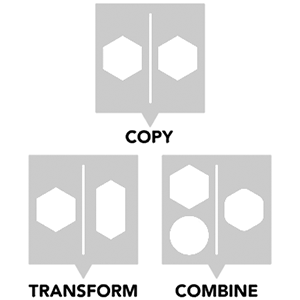
Remix culture is a term used to describe a society which allows and encourages derivative works. Remix is defined as combining or editing existing materials to produce a new product. A Remix Culture would be, by default, permissive of efforts to improve upon, change, integrate, or otherwise remix the work of copyright holders.
In his 2008 book, ‘Remix,’ Lawrence Lessig presents this as a desirable ideal and argues, among other things, that the health, progress, and wealth creation of a culture is fundamentally tied to this participatory remix process.
read more »
Posted in Money, Politics, Technology |
Leave a Comment »
April 10, 2012

Q is a fictional character in the James Bond novels and films. Q (standing for Quartermaster), like M, is a job title rather than a name. He is the head of Q Branch (or later Q Division), the fictional research and development division of the British Secret Service.
The character actually appears only fleetingly in Ian Fleming’s novels, but comes into his own in the successful Bond film series; he is also mentioned in the continuation novels of John Gardner and Raymond Benson. Q has appeared in 20 of 23 Eon Bond films; all except ‘Live and Let Die,’ ‘Casino Royale,’ and ‘Quantum of Solace.’ The character was also featured in the non-official Bond films ‘Casino Royale’ (1967) and ‘Never Say Never Again.’
read more »
Posted in Language, Technology, War |
Leave a Comment »
April 3, 2012


The Deep Web (also called the Invisible Net, the Deep Web, Undernet, or the hidden Web) refers to World Wide Web content that is not part of the Surface Web, which is indexable by standard search engines. It should not be confused with the ‘dark Internet,’ the computers that can no longer be reached via Internet, or with the distributed filesharing network ‘Darknet,’ which could be classified as a smaller part of the Deep Web.
Mike Bergman, founder of ‘BrightPlanet,’ credited with coining the phrase, has said that searching on the Internet today can be compared to dragging a net across the surface of the ocean: a great deal may be caught in the net, but there is a wealth of information that is deep and therefore missed. Most of the Web’s information is buried far down on dynamically generated sites, and standard search engines do not find it. Traditional search engines cannot ‘see’ or retrieve content in the deep Web—those pages do not exist until they are created dynamically as the result of a specific search. The deep Web is several orders of magnitude larger than the surface Web.
read more »
Posted in Money, Technology, World |
1 Comment »
April 3, 2012


Simian Mobile Disco are an electronic music duo and production team from London, formed in 2005 by James Ford and Jas Shaw. Musically, they are known for their analog production. In addition to his work with Simian Mobile Disco, Ford is a producer and has worked with artists such as Florence and the Machine, Peaches, Arctic Monkeys, and Klaxons. Simian Mobile Disco originally formed as a DJ duo, on the side of their early four-piece band Simian. They released a number of early tastemaker singles, such as ‘The Mighty Atom / Boatrace / Upside Down’ on I’m a Cliché and ‘The Count’ on Kitsuné, but gained more fame for their remixes of artists such as Muse, Klaxons, The Go! Team, Air, and others.
In 2006, Kitsuné released the duo’s underground hit ‘Hustler,’ which features guest vocals from New York singer Char Johnson. The band’s debut album, ‘Attack Decay Sustain Release’ was released in 2007 on Wichita Recordings. The lead single, ‘It’s the Beat,’ features Ninja from UK indie band The Go! Team on vocals. Their sophomore studio album, ‘Temporary Pleasure’ was released in 2009, and featured many guests including Gruff Rhys of Super Furry Animals, Alexis Taylor of Hot Chip, Beth Ditto of Gossip, and Chris Keating of Yeasayer.
Posted in Art, Technology |
Leave a Comment »
April 2, 2012

UV tattoos are tattoos made with a special ink that is visible under an ultraviolet light (blacklight). Depending upon the ink, they can be nearly invisible in non-UV environments, thus they are a popular consideration for people seeking a subtler tattoo. They are particularly popular in the raver subculture. Although the tattoos are sometimes considered invisible in normal light, scarring from the tattoo machine in the application process may remain, and therefore still show.
A UV tattoo becomes visible under blacklight, when it glows in colors ranging from white to purple, depending on the ink chosen. Colored ink is also available, where the ink is visible in normal light (as with a regular tattoo) but the ink will glow vividly under UV light. However, some UV inks are not as bright under normal light as normal tattoo ink and are considered not as vibrant.
Posted in Art, Health, Technology |
Leave a Comment »
April 2, 2012
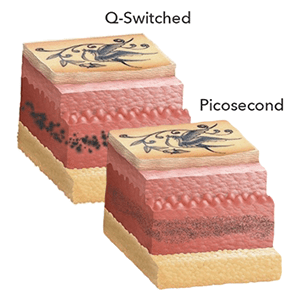
InfinitInk is a tattoo ink, which allows for easier tattoo removal, with removal up to three times faster than conventional inks. It is produced by Freedom2, Inc., and is available as of 2009 in limited release in the United States. It is currently only available in black and red, with other colors planned. The initial ink formulation consisted of inert plastic beads, containing bioremovable dyes. Laser application ruptures the beads, allowing the ink to leak out and be removed by the body.
The concept for this ink arose initially from potential medical uses, such as in reconstructive surgery and in radiation oncology. However, it was clear that a permanent and safe, yet more removable ink would also find use by some artists for decorative tattooing.
Posted in Money, Technology |
Leave a Comment »
April 2, 2012

Grouping vehicles into platoons is a method of increasing the capacity of roads. An automated highway system is a proposed technology for doing this. Platoons decrease the distances between cars using electronic, and possibly mechanical, coupling. This capability would allow many cars to accelerate or brake simultaneously. Instead of waiting after a traffic light changes to green for drivers ahead to react, a synchronized platoon would move as one, allowing up to a fivefold increase in traffic throughput.
This system also allows for a closer headway between vehicles by eliminating reacting distance needed for human reaction. Platoon capability might require buying new cars, or it may be something that can be retrofitted. Drivers would probably need a special license endorsement on account of the new skills required and the added responsibility when driving in the lead. Smart cars with artificial intelligence could automatically join and leave platoons. In the automated highway system proposal, cars organize themselves into platoons of eight to twenty-five.
Posted in Technology |
Leave a Comment »
April 2, 2012


A concept vehicle or show vehicle is a car made to showcase new styling and or new technology. They are often shown at motor shows to gauge customer reaction to new and radical designs which may or may not have a chance of being produced. General Motors designer Harley Earl is generally credited with inventing the concept car, and did much to popularize it through its traveling Motorama shows of the 1950s.
Concept cars never go into production directly; in modern times all would have to undergo many changes before the design is finalized for the sake of practicality, safety and cost. A ‘production-intent’ vehicle, as opposed to a concept vehicle, serves this purpose.
read more »
Posted in Money, Technology |
Leave a Comment »
April 2, 2012

The Nissan NV200 is a light commercial vehicle first shown as a concept car at the 2007 Tokyo Motor Show. Though it is an alternative to the Nissan Vanette, it is only available as a van model. ‘NV’ stands for New generation Vehicle, or sometimes ‘New Vanette’ by fans.
It was launched in Japan in 2009. The NV200 was one of three finalists (alongside the Karsan V-1 and Ford Transit Connect) for New York City’s Taxi of Tomorrow competition. The Nissan was announced as the winner in 2011 and is expected to be awarded a 10-year contract to provide the city exclusively with some 13,000 yellow cabs, starting in 2013. A fully electric version of the Nissan NV200 may be available by 2017 for the NYC Taxi fleet.
Posted in Money, Technology |
1 Comment »
March 28, 2012

Photomontage is the process and result of making a composite photograph by cutting and joining a number of other photographs. The composite picture was sometimes photographed so that the final image is converted back into a seamless photographic print. A similar method, although one that does not use film, is realized today through image-editing software.
This latter technique is referred to by professionals as ‘compositing,’ and in casual usage is often called ‘photoshopping.’ Author Oliver Grau in his book ‘Virtual Art: From Illusion to Immersion’ notes that the creation of artificial immersive virtual reality, arising as a result of technical exploitation of new inventions, is a long-standing human practice throughout the ages. Such environments as dioramas were made of composited images.
read more »
Posted in Art, Technology |
Leave a Comment »
March 23, 2012

Computer-mediated reality refers to the ability to add to, subtract information from, or otherwise manipulate one’s perception of reality through the use of a wearable computer or hand-held device. Typically, it is the user’s visual perception of the environment that is mediated.
This is done through the use of some kind of electronic device, such as an EyeTap device or smart phone, which can act as a visual filter between the real world and what the user perceives. Computer-mediated reality has been used to enhance visual perception as an aid to the visually impaired: mediated reality was achieved by taking a video input stream that would have normally reached the user’s eyes, and computationally altering it into a more useful form.
Posted in Health, Technology |
Leave a Comment »



