January 1, 2012
Michel Waisvisz [whyz-vizz] (1949 – 2008) was a Dutch composer, performer and inventor of experimental electronic musical instruments. He became the artistic director of STEIM (STudio for Electro Instrumental Music) in Amsterdam from 1981, where he collaborated with musicians and artists from all over the world. His involvement with STEIM goes back until 1969, when it had been co-founded by his mentor and friend Dick Raaymakers.
Waisvisz had a passionate dedication to a physical, bodily approach to electronic music which he has expressed in the use and presentation of his many developments of hardware and software instruments. From his point of view electronic music is created in direct musical interaction with individual technology, allowing for instant travels into sound through improvisation.
Posted in Art, Technology |
Leave a Comment »
January 1, 2012

STEIM (STudio for Electro Instrumental Music) is a center for research and development of new musical instruments in the electronic performing arts, located in Amsterdam. Electronic music in STEIM’s context is always strongly related to the physical and direct actions of a musician. In this tradition, STEIM supports artists in residence such as composers and performers, but also multimedia and video artists to develop setups which allow for improvisation and performance with individually designed technology. STEIM was founded in 1969 by a s group of Dutch composers seeking the reformation of Amsterdam’s feudal music structures; they enforced the first public fundings for experimental and improvised electronic music in Holland. Its premises include three studios, a concert hall, hardware and software workshops, offices, and a guesthouse for artists in residence.
For most of STEIM’s instrumental developments ‘Touch is crucial in communicating with the new electronic performance art technologies.’ As with traditional musical instruments, the physical touch of a musician contains essential aesthetic factors. These qualities tend to get lost in the non-realtime use of studio technology, in which the process of music production is distant and abstract. The Touch philosophy — which can be considered as STEIM’s interpretation of the widely used term interactivity — theoretically subsumes several stages of STEIM’s developments, from the analog touchable ‘Crackle’ surfaces in the 70s to today’s experimental Gestural MIDI Interfaces.
Posted in Art, Technology, World |
Leave a Comment »
January 1, 2012
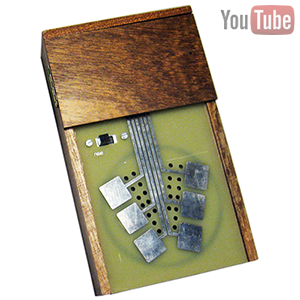
The Kraakdoos (or Cracklebox) is a custom made battery-powered noise-making device. It is a small box with six metal contacts on top, which when pressed by fingers generate all manner of unusual sounds and tones. The human body becomes a part of the circuit and determines the range of sounds possible — different people will generate different results.
The concept was first conceived by Michel Waisvisz and Geert Hamelberg in the 1960s, and developed further in the 1970s when Waisvisz joined STEIM (STudio for Electro Instrumental Music) in Amsterdam. The kraakdoos is a simple device, based around a single operational amplifier (one of the earliest models to be produced) and a few transistors, and can be easily constructed by someone with a basic understanding of electronics.
Posted in Art, Technology |
Leave a Comment »
December 31, 2011

Some governments around the world have passed measures to phase out incandescent light bulbs for general lighting. The aim is to encourage the use and technological development of more energy-efficient lighting alternatives, such as compact fluorescent lamp (CFLs) and LED lamps. Brazil and Venezuela started to phase them out in 2005, and the European Union, Switzerland, and Australia started to phase them out in 2009. Likewise, other nations are planning scheduled phase-outs: Argentina, Russia, and Canada in 2012, and the United States and Malaysia in 2014.
There has been consumer resistance to phasing out of incandescent lamps, preferring the quality of light produced from incandescents, the libertarian political theory of free markets as trumping ‘national interest’ as a reason for regulation, and environmental concerns about mercury contamination with CFLs. Formerly, instant availability of light was an issue for CFLs, but newer CFLs have an Instant On feature, as well as a wide variety of correlated color temperatures. CFLs and LEDs labeled for dimmer control are also becoming available, although typically at higher cost. The phase out has been referred to as ‘light bulb socialism.’ The consumer preference for light bulbs in the EU is for incandescent bulbs, with many complaining about what was described as the ugliness or the cold, flat, unnatural, dull light emanating from CFLs. Bulk purchasing of incandescent bulbs was reported ahead of the EU lightbulb ban.
Posted in Politics, Technology, World |
Leave a Comment »
December 28, 2011

Wife Acceptance Factor (WAF) refers to design elements that increase the likelihood a wife will approve the purchase of expensive consumer electronics products such as home theater systems and personal computers. Stylish, compact, unobtrusive forms and appealing colors are commonly considered WAF. The term is a tongue-in-cheek play on electronics jargon such as ‘form factor’ and ‘power factor’ and derives from the gender stereotype that men are predisposed to appreciate gadgetry and performance criteria whereas women must be wooed by visual and aesthetic factors.
Larry Greenhill first used the term in 1983, writing for ‘Stereophile’ magazine, but Greenhill credited fellow reviewer and music professor Lewis Lipnick with the coining of the term. Lipnick himself traces the origin to the 1950s when hi-fi loudspeakers were so large that they overwhelmed most living rooms. Lipnick’s wife, actress Lynn-Jane Foreman, arrived at a different term: Marriage Interference Factor (MIF). Foreman suggested that audiophile husbands should balance their large and ugly electronic acquisitions with gifts to the wife made on the basis of similar expense, with opera tickets, jewelry and vacations abroad among the suggestions.
Posted in Humor, Money, Technology |
1 Comment »
December 25, 2011
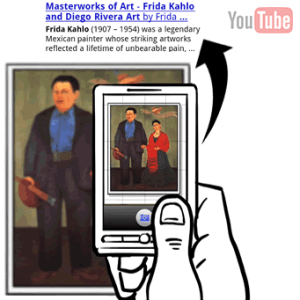
Google Goggles is an image recognition application used for searches based on pictures taken by handheld devices. The program proposed will be able to identify virtually anything. Currently the system can identify various labels or landmarks, allowing users to learn about such items without needing a text-based search. The system can identify products barcodes or labels that allow users to search for similar products and prices, and save codes for future reference, similar to the failed CueCat of the late ’90s, but with more functionality. The system will also recognize printed text and using optical character recognition (OCR) produce a text snippet, and in some cases even translate the snippet into another language.
Google is currently working to make the system able to recognize different plants and leaves, which can aid curious persons, those wishing to avoid toxic plants, and botanists and environmentalists searching for rare plants. Goggle applications are in the process of being used for metaverse virtual world image indexing and catalog applications. Regional coordinates are cammed by avatar-based movement in virtual camera scripted vehicles. In 2011, version 1.3 was released; it can solve Sudoku puzzles.
Posted in Technology |
Leave a Comment »
December 24, 2011


Word Lens is an augmented reality translation application for the iPhone from Quest Visual. It uses the built-in phone camera to identify text, such as a sign or a menu, in one language and have the words shown translated into another language. The words are displayed in the original context, on the original background, without connection to the internet. When it was released in 2010 only English and Spanish were supported. Word Lens is best used on clearly printed text and was not designed to translate handwritten or stylized fonts.
This application was created to help tourists understand signs and menus. The application was not designed to read books, but journalist Ben Rooney managed to understand a page from ‘Harry Potter y el Prisionero de Azkaban.’ The Google Goggles application for Android and iPhone also has the capability to translate text or identify objects in an image, but it requires users to take a picture with their phones, and an active internet connection. Word Lens does it on the fly, meaning it’s interpreting frames in video, almost in real time.
Posted in Language, Technology, World |
Leave a Comment »
December 23, 2011

Undark was a trade name for luminous paint made with a mixture of radioactive radium and zinc sulfide, as produced by the U.S. Radium Corporation between 1917 and 1938. It was used primarily in watch dials.
The people working in the industry who applied the radioactive paint became known as the Radium Girls, because many of them became ill and some died from exposure to the radiation emitted by the radium contained within the product. The product was the direct cause of Radium jaw in the dial painters. Undark was also available as a kit for general consumer use and marketed as glow-in-the-dark paint.
Posted in Health, Money, Technology |
Leave a Comment »
December 21, 2011

Aaron Koblin is an American digital media artist best known for his innovative uses of data visualization and crowdsourcing. He is currently Creative Director of the Data Arts Team at Google Creative Lab in San Francisco.
Koblin’s projects have been shown at international festivals including Ars Electronica, TED, and are part of the permanent collections at the Museum of Modern Art (MoMA) in New York and the Centre Georges Pompidou in Paris.
Posted in Art, Technology |
1 Comment »
December 21, 2011

A digital native is a person who was born during or after the general introduction of digital technology, and through interacting with digital technology from an early age, has a greater understanding of its concepts.
Alternatively, this term can describe people born in the latter 1960s or later, as the Digital Age began at that time; but in most cases the term focuses on people who grew up with the technology that became prevalent in the latter part of the 20th century, and continues to evolve today.
read more »
Posted in Language, Technology |
2 Comments »
December 21, 2011
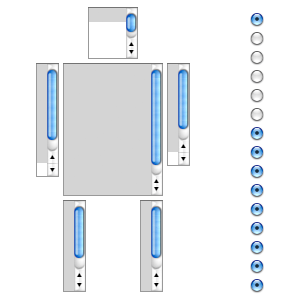
net.art refers to a group of artists who have worked in the medium of Internet art from 1994 on. The main members of this movement are Vuk Ćosić, Jodi.org, Alexei Shulgin, Olia Lialina, and Heath Bunting. Although this group was formed as a parody of avant garde movements by writers such as Tilman Baumgärtel, Josephine Bosma, Hans Dieter Huber and Pit Schultz, their individual works have little in common.
The term ‘net.art’ is also used as a synonym for net art or Internet art and covers a much wider range of artistic practices. In this wider definition, net.art means art that uses the Internet as its medium and that cannot be experienced in any other way. Often net.art has the Internet as (part of) its subject matter but it is not a requirement.
read more »
Posted in Art, Politics, Technology |
Leave a Comment »
December 20, 2011

Nettime is an internet mailing list that was founded in 1995 during the second meeting of the Medien Zentral Kommittee at the Venice Biennale. Founded by Geert Lovink and Pit Schultz, the list was meant to provide a space for a new form of critical discourse on and with the nets. Since 1995, Nettime has been recognized for building up the discourse of Netzkritik or Net Critique, providing a backdrop and context for the emergence of net.art and influencing critical net culture in general.
Often understood as a European ‘online salon,’ Nettime was initially a pre-publishing platform for international critical thinkers. Originally a mainly English language mailing list, other lists have been created for other languages. While the subscribers have changed over time, the list and lists have had the regular participation of such notable figures as: American poet John Perry Barlow, political writer Hakim Bey, art professor Ricardo Dominquez, Russian artist Alexei Shulgin, and DJ Spooky, among others. The lists has around 3500 subscribers.
Posted in Language, Politics, Technology |
Leave a Comment »



