December 7, 2011
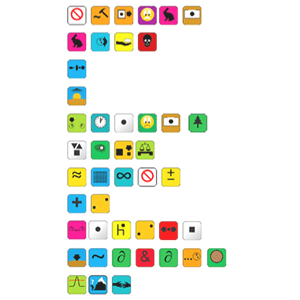
iConji is a free pictographic communication system based on an open, visual vocabulary of characters with built-in translations for most major languages. The app debuted with 1183 unique characters, known as the lexiConji (vocabulary), culled from base words used in common daily communications, word frequency lists, often-used mathematical and logical symbols, punctuation symbols, and the flags of all nations.
The process of assembling a message from iConji characters is called iConjisation. Since most characters represent an entire word or concept, rather than a single letter or character, iConji has the potential to be a more efficient communication system than SMS (texting). The usual jumble of text and confusing abbreviations can often be replaced by a short string of colorful icons that convey the identical meaning.
read more »
Posted in Language, Technology, World |
Leave a Comment »
December 7, 2011

Emoji [ih-moh-jee] is the Japanese term for the picture characters or emoticons used in Japanese electronic messages and webpages. Originally meaning pictograph, the word literally means ‘e’ (‘picture) ‘moji’ (‘letter’). The characters are used much like emoticons elsewhere, but a wider range is provided, and the icons are standardized and built into mobile devices. Some emoji are very specific to Japanese culture, such as a bowing (apologizing) businessman, a face wearing a face mask, or a group of emoji representing popular foods (e.g. ramen noodles, rice balls). The three main Japanese phone operators, NTT DoCoMo, au, and SoftBank Mobile (formerly Vodafone), have each defined their own variants of emoji.
Although typically only available in Japan, the characters and code required to use emoji are, thanks to the nature of software development, often present in many phones’ software. As a result, some phones, such as the Apple iPhone, allow access to the symbols without requiring a Japanese operator. Emoji have also started appearing in emailing services such as Gmail (accessed via Google Labs) in 2009.
Posted in Humor, Language, Technology |
Leave a Comment »
December 6, 2011
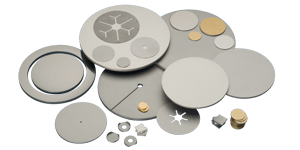
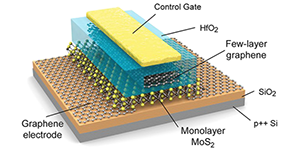
Molybdenite [mo-lib-de-nite] is a mineral (molybdenum disulfide, MoS2). Similar in appearance and feel to graphite, molybdenite has a lubricating effect that is a consequence of its layered structure, which consists of a sheet of molybdenum atoms sandwiched between sheets of sulfur atoms. The Mo-S bonds are strong, but the interaction between the sulfur atoms at the top and bottom of separate sandwich-like tri-layers is weak, resulting in easy slippage as well as cleavage planes.
Molybdenite occurs in high temperature hydrothermal ore deposits. Important deposits include the disseminated porphyry molybdenum deposits at Questa, New Mexico and the Henderson and Climax mines in Colorado. Molybdenite flakes are being researched for their potential use in low power semiconductors.
Posted in Money, Technology |
2 Comments »
December 6, 2011

The Tweel (a portmanteau of tire and wheel) is an experimental tire design developed by the French tire company Michelin. The tire uses no air, and therefore cannot burst or become flat.
Instead, the Tweel’s hub connects to flexible polyurethane spokes which are used to support an outer rim and assume the shock-absorbing role of a traditional tire’s pneumatic properties.
read more »
Posted in Money, Technology |
Leave a Comment »
December 6, 2011

Non-pneumatic tires (NPT), or Airless tires, are tires that are not supported by air pressure. They are used on some small vehicles such as riding lawn mowers and motorized golf carts. They are also used on heavy equipment such as backhoes, which are required to operate on sites such as building demolition, where tire puncture is likely. Tires composed of closed-cell polyurethane foam are also made for bicycles and wheelchairs. Airless tires generally have higher rolling friction and provide much less suspension than similarly shaped and sized pneumatic tires. Other problems for airless tires include dissipating the heat buildup that occurs when they are driven. Airless tires are often filled with compressed polymers (plastic), rather than air.
Michelin is currently developing an integrated tire and wheel combination, the ‘Tweel,’ that operates entirely without air. The automotive engineering department at Clemson University is developing a low energy loss airless tire with Michelin through the NIST ATP project. Resilient Technologies and the University of Wisconsin’s Polymer Engineering Center are creating a ‘non-pneumatic tire,’ which is basically a round polymeric honeycomb wrapped with a thick, black tread. The initial version of the tire is for the Humvee.
Posted in Language, Money, Technology |
1 Comment »
December 1, 2011

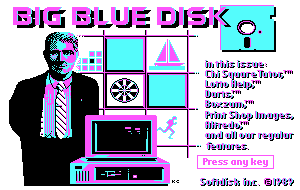
A disk magazine, colloquially known as a diskmag, is a magazine that is distributed in electronic form to be read using computers. These had some popularity in the 1980s and 1990s as periodicals distributed on floppy disk, hence their name. The rise of the Internet in the late 1990s caused them to be superseded almost entirely by online publications, which are sometimes still called ‘diskmags’ despite the lack of physical disks.
A unique and defining characteristic about a diskmag in contrast to a typical ASCII ‘zine’ is that a diskmag usually comes housed as an executable program file that will only run on a specific hardware platform. A diskmag tends to have an aesthetically appealing and custom graphical user interface (or even interfaces), background music and other features that take advantage of the hardware platform the diskmag was coded for. Diskmags have been written for many platforms, ranging from the C64 on up to the IBM PC and have even been created for video game consoles, like ‘scenedicate’ for the Dreamcast.
read more »
Posted in Games, Language, Technology |
Leave a Comment »
December 1, 2011
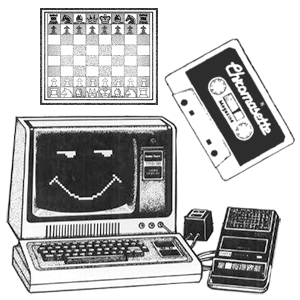
‘Chromasette‘ was the first ever, cassette-based TRS-80 Color Computer magazine produced by David Lagerquist and was an offshoot of ‘CLOAD’ magazine. It was published monthly from 1981 – 1984. It was advertised in ‘Creative Computing’ magazine in 1983 as $45 a year for 12 issues, or $5 each.
The first issue contained 5 Basic programs, and the ‘cover’ of the electronic magazine (which had to be loaded onto a TRS-80 Color Computer and then run) was dynamic. Included with each cassette was a 5-6 page newsletter explaining the programs included on the cassette, including their PMODE and PCLEAR values (if needed), their locations on tape, and several paragraphs of documentation about each (sometimes suggesting program alterations that change or improve the results).
Posted in Language, Money, Technology |
Leave a Comment »
December 1, 2011

Leet (or ‘1337’), short for ‘elite,’ also known as leetspeak, is an alternative alphabet for the English language that is used primarily on the Internet. It uses various combinations of ASCII characters to replace Latinate letters. For example, leet spellings of the word leet include 1337 and l33t; eleet may be spelled 31337 or 3l33t.
The term is derived from the word ‘elite.’ Leet may also be considered a substitution cipher, although many dialects or linguistic varieties exist in different online communities. The term ‘leet’ is also used as an adjective to describe formidable prowess or accomplishment, especially in the fields of online gaming and in its original usage, computer hacking.
read more »
Posted in Language, Technology |
Leave a Comment »
December 1, 2011
Cyberculture is the culture that has emerged, or is emerging, from the use of computer networks for communication, entertainment and business. It is also the study of various social phenomena associated with the Internet and other new forms of network communication, such as online communities, online multi-player gaming, social media and texting.
Since the boundaries of cyberculture are difficult to define, the term is used flexibly, and its application to specific circumstances can be controversial. It generally refers at least to the cultures of virtual communities, but extends to a wide range of cultural issues relating to ‘cyber-topics,’ e.g. cybernetics. It can also embrace associated intellectual and cultural movements, such as cyborg theory in feminism and cyberpunk in literature. The term often incorporates an implicit anticipation of the future.
read more »
Posted in Language, Technology, World |
Leave a Comment »
December 1, 2011
Netnography is the branch of ethnography (the study and recording of human cultures) that analyzes the free behavior of individuals on the Internet that uses online marketing research techniques to provide useful insights.
The term was coined by market research expert Robert Kozinets. It provides information on the symbolism, meanings, and consumption patterns of online consumer groups.
read more »
Posted in Money, Technology, World |
Leave a Comment »
November 30, 2011
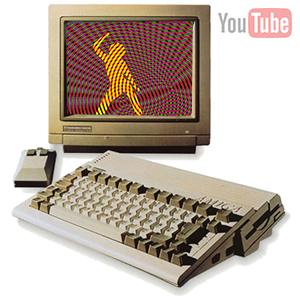
The demoscene is a computer art subculture that specializes in producing demos, which are non-interactive audio-visual presentations that run in real-time on a computer. The main goal of a demo is to show off programming, artistic, and musical skills. The demoscene first appeared during the 8-bit era on computers such as the Commodore 64, ZX Spectrum and Amstrad CPC, and came to prominence during the rise of the 16/32-bit home computers (the Amiga and the Atari ST). In the early years, demos had a strong connection with software cracking. When a cracked program was started, the cracker or his team would take credit with a graphical introduction called a ‘crack intro’ (shortened cracktro). Later, the making of intros and standalone demos evolved into a new subculture independent of the software (piracy) scene.
Prior to the popularity of IBM PC compatibles, most home computers of a given line had relatively little variance in their basic hardware, which made their capabilities practically identical. Therefore, the variations among demos created for one computer line were attributed to programming alone, rather than one computer having better hardware. This created a competitive environment in which demoscene groups would try to outperform each other in creating amazing effects, and often to demonstrate why they felt one machine was better than another.
read more »
Posted in Art, Games, Technology |
Leave a Comment »
November 30, 2011

A display hack is a computer program with similar purpose to a kaleidoscope: to make pretty pictures (symmetrical or otherwise). Famous display hacks include ‘munching squares’ and ‘smoking clover.’ Some display hacks can be also implemented by creating text files which contain numerous escape sequences for a text terminal to interpret. A famous example on the VT100 terminal displayed a Christmas tree, with twinkling lights and a toy train circling its base. The XScreenSaver software contains a large collection of X Window System and OpenGL display hacks.
Display hacks have a history of several decades. Arguably the first display hack was a program called Bouncing Ball on the Whirlwind computer in the early 1950s. The famous munching squares hack, on the other hand, originates in the PDP-1 computer in ca. 1962. Crack intros, display hacks programmed by software crackers for the home computers of the 1980s, evolved into what was to be known as demos and demo effects. The creation of demos later became a subculture of its own, now known as the demoscene.
Posted in Games, Technology |
Leave a Comment »



