April 21, 2011

A parahuman is a human-animal hybrid or chimera. Scientists have done extensive research into the mixing of genes or cells from different species, e.g. adding human (and other animal) genes to bacteria and farm animals to mass-produce insulin and spider silk proteins, and introducing human cells into mouse embryos. There is no scientific field of parahuman research. Ethical, moral, and legal issues of parahuman research are speculative extensions of existing issues that arise in actual research.
There are several reasons for which parahumans or chimeras might be created. The current forms of chimera exist for medical and industrial purposes. Other experiments aim to reveal knowledge about the function of the human body, e.g., by creating mice with a human-like immune system to study AIDS or with a brain incorporating human nerve cells. Restrictions on cloning and stem cell research have made chimera research an attractive alternative.
Posted in Politics, Science, Technology |
Leave a Comment »
April 21, 2011
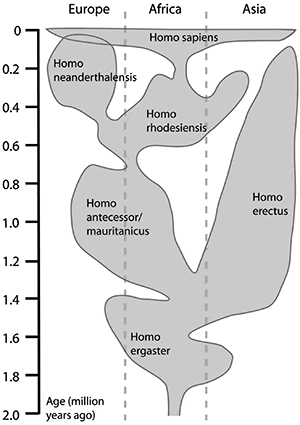
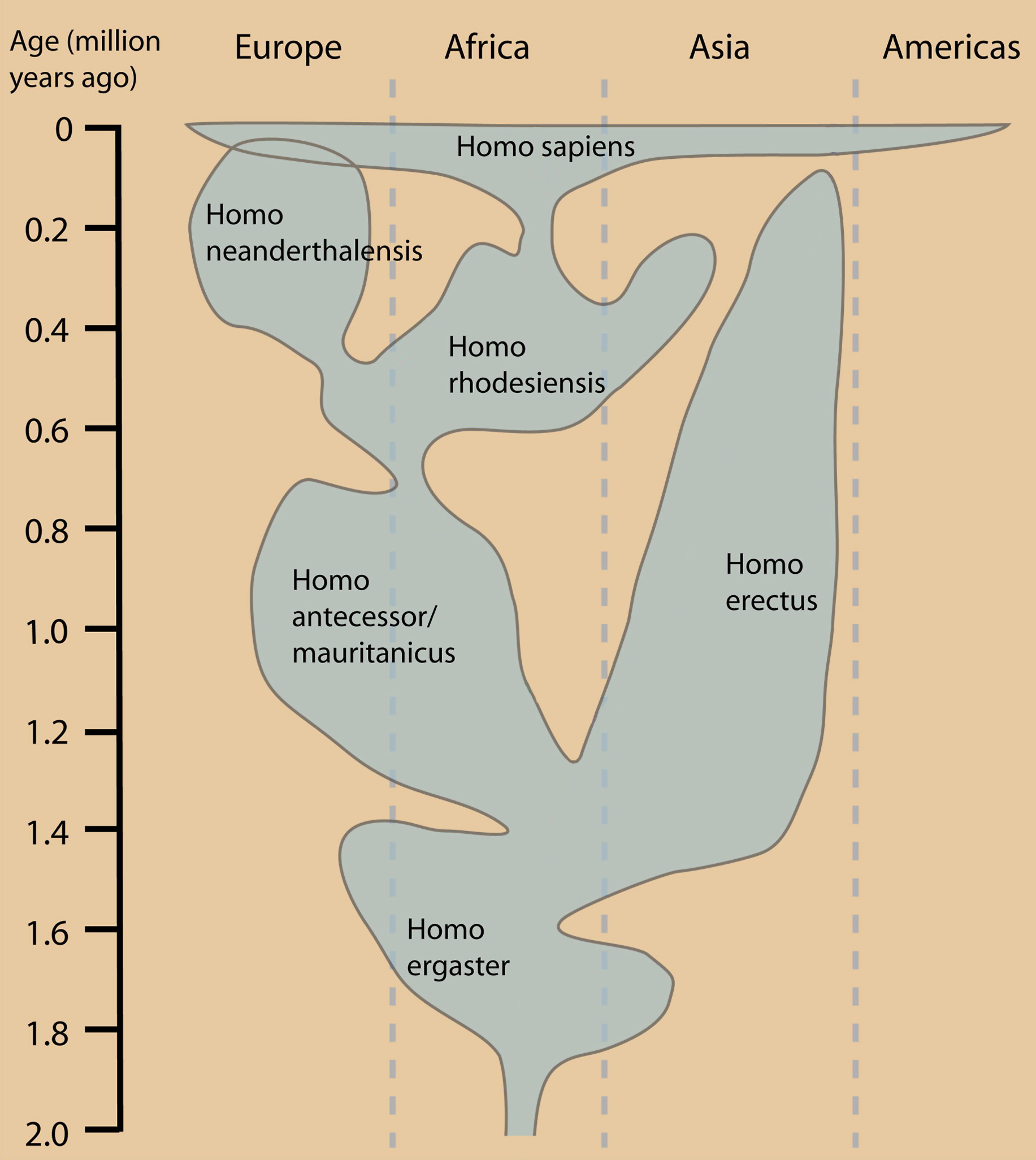
Homo (Latin for ‘man’) is the genus separated from the earlier hominids because of the emergence of tool use, language and culture. The genus begins about 2.3 million years ago. The characteristics of these species are bigger brain (above 1000 ml), the forehead rises straight up, the skull becomes rounder, the teeth are reduced, arms are shorter and legs are longer, and the skeleton becomes more delicate. It was Carolus Linnaeus, the father of modern taxonomy (the science of classification) who chose the name Homo for the genus humans are categorized in.
There is only one living species in the genus: Homo sapiens. All others are extinct (e.g. homo erectus, homo neanderthalensis). Anthropologists are still investigating the exact line of descent of the human species. The evolution of the genus Homo took place mostly in the Pleistocene (the epoch from 2,588,000 to 12,000 years BCE). The homo genus is characterised by its use of stone tools, initially crude, and becoming ever more sophisticated. So much so that in archaeology and anthropology the Pleistocene is usually referred to as the Palaeolithic, or the Stone Age.
Posted in Science, Technology |
Leave a Comment »
April 18, 2011
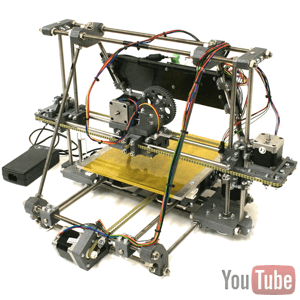
The RepRap project is an initiative to develop a 3D printer (RepRap, short for ‘replicating rapid prototyper’) that can print most of its own components. As an open design, all of the designs produced by the project are released under a free software license. The device uses a variant of fused deposition modeling, an additive manufacturing technique.
Due to the self-replicating ability of the machine, authors envision the possibility to cheaply distribute RepRap units to people and communities, enabling them to create (or download from the internet) complex products without the need for expensive industrial infrastructure.
Posted in Money, Technology |
1 Comment »
April 18, 2011

A 3D printer is a machine that prints solid copies of objects from computer drawings. Some use powder. Some use liquid plastic. They all make the object by building it up layer by layer in an additive process.
In some industries these printers are called rapid prototyping machines. Car makers use 3D printers to try out new shapes for things like door handles; designers use try new shapes for consumer electronics; artists create sculptures; and jewelry designers can try out new ideas and make molds for rings.
read more »
Posted in Art, Money, Technology |
Leave a Comment »
April 13, 2011

Zentsūji is a town in Japan notable for producing square watermelons by growing the fruits in glass boxes and letting them naturally assume the shape of the receptacle.
The square shape is designed to make the melons easier to stack and store, but the square watermelons are often more than double the price of normal ones. Pyramid shaped watermelons have also been developed.
Posted in Food, Technology, World |
1 Comment »
April 13, 2011

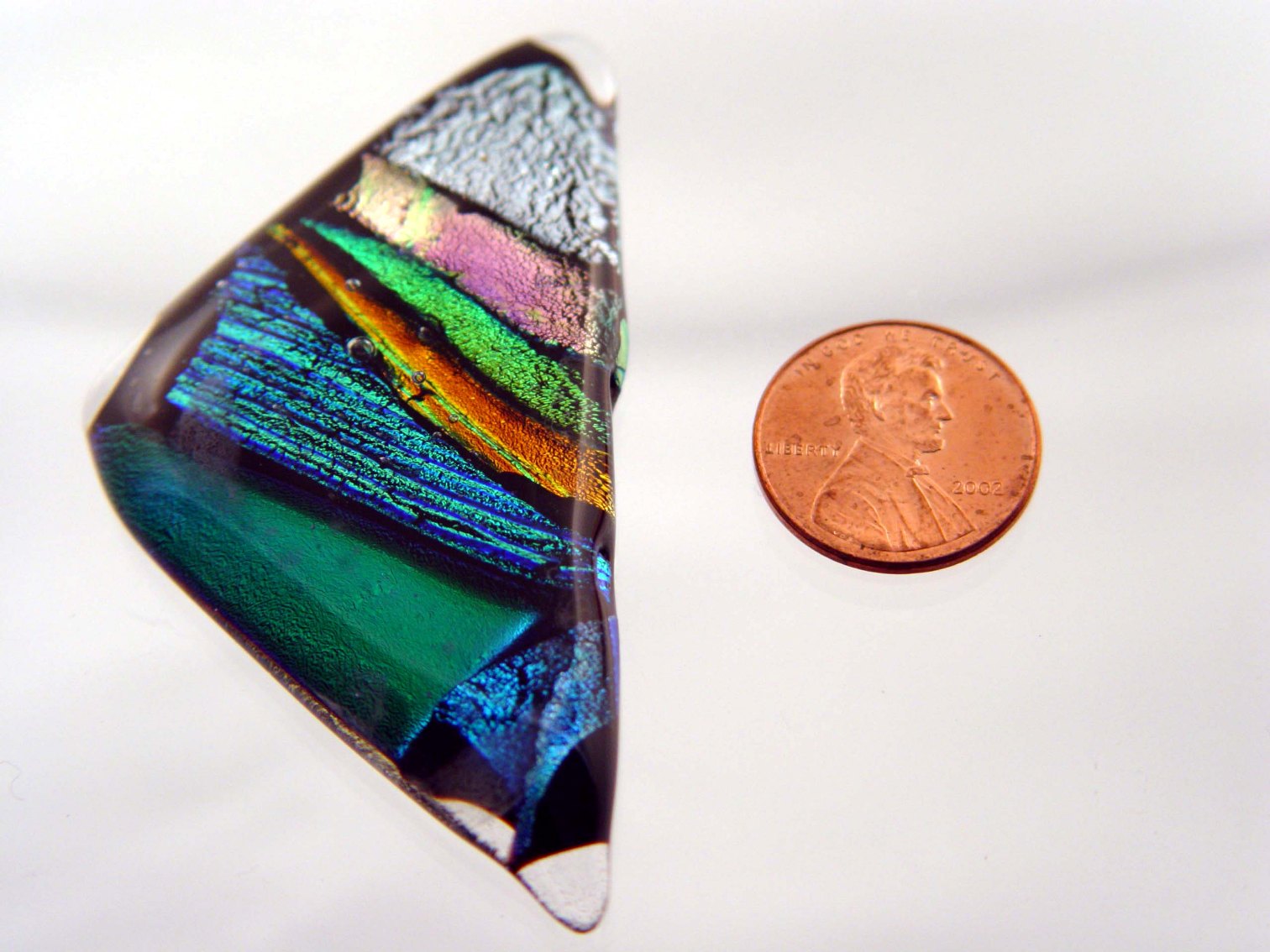
Dichroic [dahy-kroh-ik] glass is glass containing multiple micro-layers of metal oxides which alter its optical properties. The invention of dichroic glass is often erroneously attributed to NASA and its contractors, who developed it for use in dichroic filters.
Dichroic glass dates back to at least the 4th century CE as seen in the Lycurgus cup, a Roman relic.
read more »
Posted in Art, Science, Technology |
2 Comments »
April 12, 2011


A bottle wall is a wall made out of glass bottles and binding material. A building construction style which usually uses 1l glass bottles (although mason jars or 1/2l glass jugs may be used as well) as masonry units and binds them using adobe, sand, cement, stucco, clay, plaster, mortar or any other joint compound to result in an intriguing stained-glass like wall.
read more »
Posted in Art, Money, Technology |
Leave a Comment »
April 12, 2011

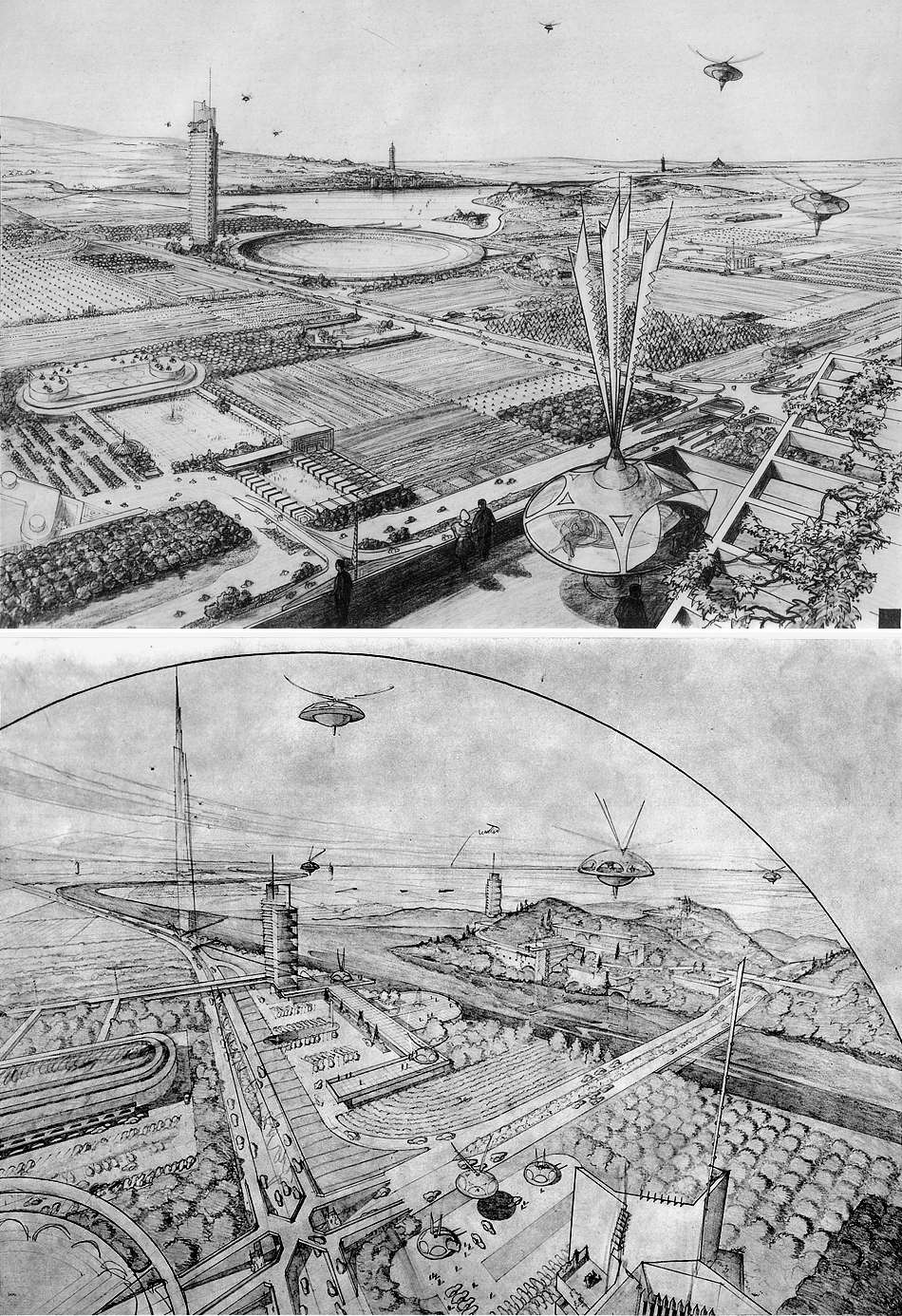
Broadacre City was an urban or suburban development concept proposed by Frank Lloyd Wright throughout most of his lifetime. He presented the idea in his book ‘The Disappearing City’ in 1932. A few years later he unveiled a very detailed twelve by twelve foot (3.7 by 3.7 m) scale model representing a hypothetical four square mile (10 km²) community. Wright would go on refining the concept in later books and in articles until his death in 1959.
Many of the building models in the concept were completely new designs by Wright, while others were refinements of old ones, some of which had been rarely seen. Broadacre City was the antithesis of a city and the apotheosis of the newly born suburbia, shaped through Wright’s particular vision. It was both a planning statement and a socio-political scheme by which each U.S. family would be given a one acre (4,000 m²) plot of land from the federal lands reserves, and a Wright-conceived community would be built anew from this. In a sense it was the exact opposite of transit-oriented development.
Posted in Money, Technology |
Leave a Comment »
April 12, 2011
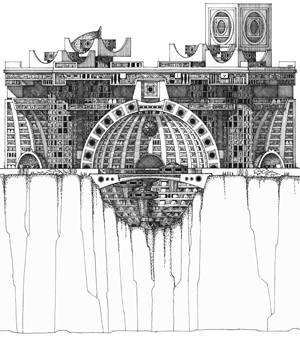
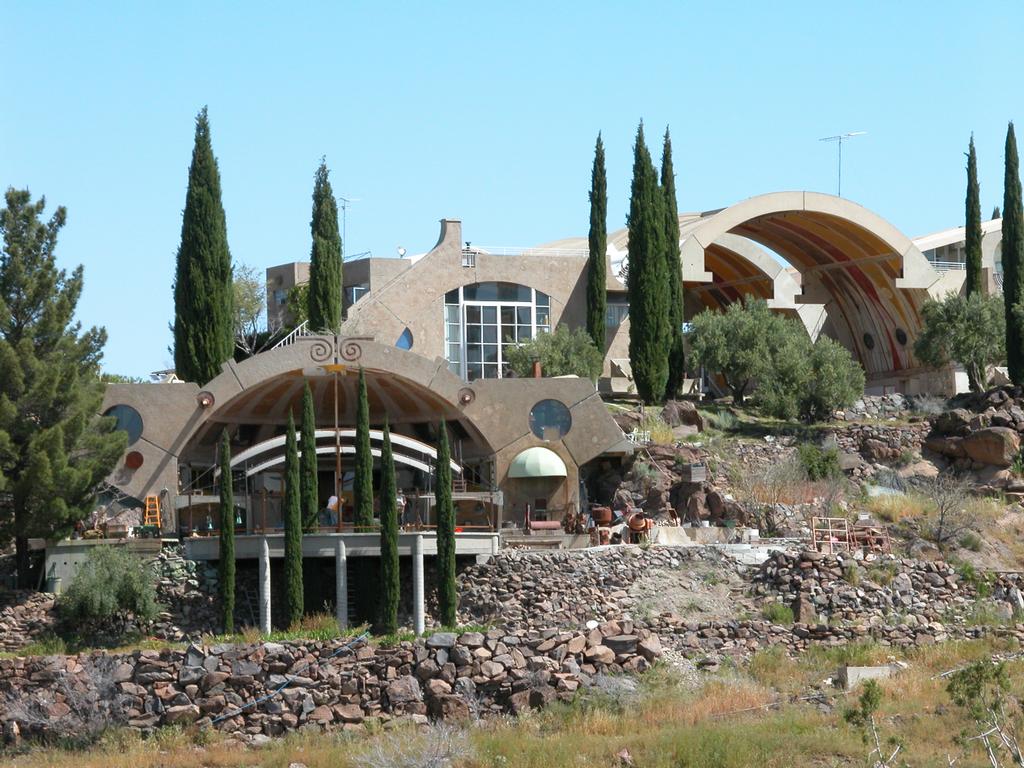
Arcosanti is an experimental town that began construction in 1970 in central Arizona, 70 mi (110 km) north of Phoenix, at an elevation of 3,732 feet (1,130 meters).
Architect Paolo Soleri, using a concept he calls arcology (a portmanteau of architecture and ecology), started the town to demonstrate how urban conditions could be improved while minimizing the destructive impact on the earth.
read more »
Posted in Money, Science, Technology |
Leave a Comment »
April 12, 2011
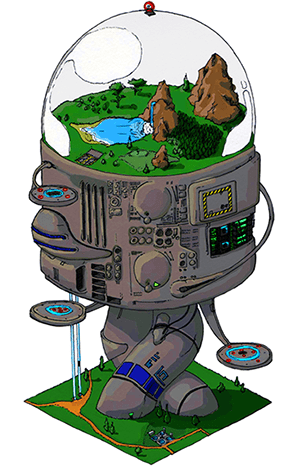
Arcology, a portmanteau of the words ‘architecture’ and ‘ecology,’ is a set of architectural design principles aimed toward the design of enormous habitats (hyperstructures) of extremely high human population density. These largely hypothetical structures would contain a variety of residential, commercial, and agricultural facilities and minimize individual human environmental impact.
They are often portrayed as self-contained or economically self-sufficient. The concept has been primarily popularized, and the term itself coined, by architect Italian-American architect, Paolo Soleri, and appears commonly in science fiction.
read more »
Posted in Money, Technology |
Leave a Comment »
April 12, 2011

The Anthropocene [an-thruh-poh-seen] is a proposed geological epoch that marks the impact of human activities on the Earth’s ecosystems. The term was coined in 2000 by the Nobel Prize-winning atmospheric chemist Paul Crutzen, who regards the influence of human behavior on the Earth’s atmosphere in recent centuries as so significant as to constitute a new geological era for its lithosphere (the rigid outermost shell of a rocky planet). As early as 1873, the Italian geologist Antonio Stoppani acknowledged the increasing power and impact of humanity on the Earth’s systems and referred to the ‘anthropozoic era’
The Anthropocene has no precise start date, but based on atmospheric evidence may be considered to start with the Industrial Revolution (late 18th century). Other scientists link it to earlier events, such as the rise of agriculture. Human influence on land use, ecosystems, biodiversity and species extinctions, may have begun as early as 10,000 years before present. This period (10,000 years to present) is usually referred to as the Holocene by geologists. For the majority of the Holocene, human populations were relatively low and their activities considerably muted relative to that of the last few centuries. Nonetheless, many of the processes currently altering the Earth’s environment were already occurring.
Posted in Language, Science, Technology |
Leave a Comment »
April 11, 2011

The Dream Director is a touring installation by artist Luke Jerram intended to alter dreams. It continues the artist’s exploration of creating art inside people’s heads (‘on the edges of perception’) rather than in the physical world. Participants in the Dream Director (usually 20 in total) stay overnight in specially designed sleep pods.
read more »
Posted in Art, Philosophy, Technology |
Leave a Comment »