March 7, 2013
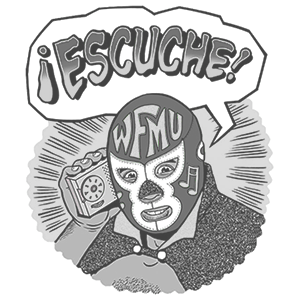
Freeform radio, is a radio station programming format in which the disc jockey is given total control over what music to play, regardless of music genre or commercial interests. Freeform radio stands in contrast to most commercial radio stations, in which DJs have little or no influence over programming structure or playlists. In the United States, freeform DJs are still bound by Federal Communications Commission regulations.
Many shows lay claim to be the first freeform radio program; the earliest is ‘Nightsounds’ on KPFA-FM in Berkeley, California, D.J.’d by John Leonard. Probably the best-remembered in the Midwest is ‘Beaker Street,’ which ran for almost 10 years on KAAY ‘The Mighty 1090’ in Little Rock, Arkansas, beginning in 1966, making it also probably the best-known such show on an AM station; its signal reached from Canada to Mexico and Cuba, blanketing the Midwest and Midsouth of the U.S. Continue reading →
Posted in Art, Money |
Leave a Comment »
March 7, 2013
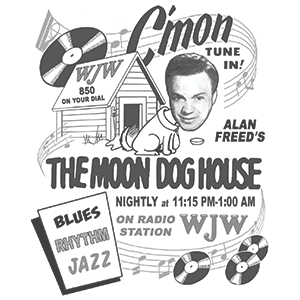
Payola [pey-oh-luh], in the American music industry, is the illegal practice of payment or other inducement by record companies for the broadcast of recordings on music radio in which the song is presented as being part of the normal day’s broadcast.
A radio station can play a specific song in exchange for money, but this must be disclosed on the air as being sponsored airtime, and that play of the song should not be counted as a ‘regular airplay.’ The term has come to refer to any secret payment made to cast a product in a favorable light (such as obtaining positive reviews). Some radio stations report spins of the newest and most popular songs to industry publications. The number of times the songs are played can influence the perceived popularity of a song. Continue reading →
Posted in Money, Politics |
Leave a Comment »
March 7, 2013
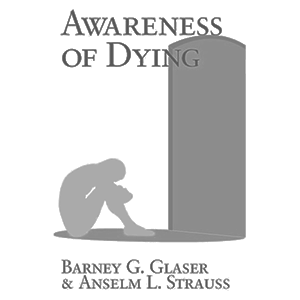
Mortality salience [sey-lee-uhns] is a term which describes awareness of one’s eventual death. Mortality salience has the potential to cause worldview defense, a psychological mechanism which strengthens people’s connection with their in-group as a defense mechanism. This can lead to feelings of nationalism and racial bigotry being intensified.
Studies also show that mortality salience can also lead people to feel more inclined to punish minor moral transgressions. One such study divided a group of judges into two groups — one which was asked to reflect upon their own mortality, and one group which was not. The judges were then asked to set a bond for an alleged prostitute. The group who had reflected on mortality set an average bond of $455, while the control group’s average bond was $50. Continue reading →
Posted in Death, Health, Philosophy |
Leave a Comment »
March 7, 2013
‘The Trap: What Happened to Our Dream of Freedom’ is a 2007 BBC documentary series by English filmmaker Adam Curtis, well known for other documentaries including ‘The Century of the Self’ and ‘The Power of Nightmares.’
The series consists of three one-hour programs which explore the concept and definition of freedom, specifically, ‘how a simplistic model of human beings as self-seeking, almost robotic, creatures led to today’s idea of freedom.’ Continue reading →
Posted in Philosophy, Politics, War |
Leave a Comment »
March 6, 2013

Thomas Frank (b. 1965) is an American political analyst, historian, and journalist. He co-founded and edited ‘The Baffler magazine.’ He is a former columnist for the ‘Wall Street Journal,’ authoring ‘The Tilting Yard’ from 2008 to 2010. Frank is a historian of culture and ideas and analyzes trends in American electoral politics and propaganda, advertising, popular culture, mainstream journalism and economics.
With his writing, he explores the rhetoric and impact of the ‘Culture Wars’ in American political life, and the relationship between politics and culture in the United States. Frank started his political journey as a College Republican, but has come to be highly critical of conservatism, especially the presidency of George W. Bush. Frank summarized the thesis of his book ‘The Wrecking Crew: How Conservatives Rule’ as ‘Bad government is the natural product of rule by those who believe government is bad.’
Posted in Language, Money, Politics |
Leave a Comment »
March 6, 2013

The impact of Native American Gaming varies by tribe and location. In the 1970s, various tribes took unprecedented action to initiate gaming enterprises. In doing so, they created not only a series of legal struggles between the federal, state, and tribal governments but also a groundbreaking way to revitalize the Native American economy.
Native American gaming has grown from bingo parlors to high stakes gaming and is surrounded by controversy on many different levels. There are disputes concerning tribal sovereignty, negative effects of gaming, and a loss of Native American culture. In the US the ‘Indian Gaming Regulatory Act’ (IGRA) was passed in 1988 in order to secure collaboration between the states and tribes and also in order for the federal government to oversee gaming operations.
Continue reading →
Posted in Games, Money, Politics |
Leave a Comment »
March 5, 2013
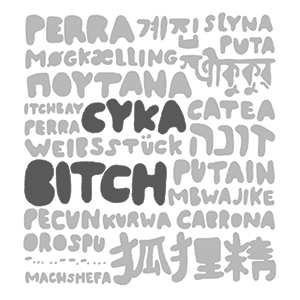
The Bitch Wars occurred within the Soviet labor camp system between 1945 and 1953 (around the death of Joseph Stalin). The Russian word ‘suka’ (literally, ‘bitch’) has a stronger negative connotation than its English equivalent.
In Russian criminal argot, it specifically refers to a person from the criminal world who had cooperated with law enforcement or the government, or ‘went bitch.’ Within the Russian prison system, there was a historical and social structure that had existed since the Tsarist era. One of the important tenets of the system was that members would not serve or collaborate with the Tsarist and later Soviet government. This rule encompassed any kind of collaboration, not only ‘snitching’ or ‘ratting.’ Continue reading →
Posted in Language, War, World |
Leave a Comment »
March 5, 2013

Mat is a term for strong obscene profanity in Russian and some other Slavic language communities. Mat is censored in the media and the use of mat in public constitutes a form of disorderly conduct, or mild hooliganism (although, such laws are only enforced episodically, in particular due to the vagueness of the legal definition).
However, despite the public ban, mat is used by Russians of all ages and nearly all social groups, with particular fervor in male-dominated military and the structurally similar social strata. Continue reading →
Posted in Language, World |
Leave a Comment »
March 5, 2013
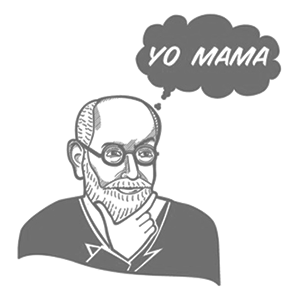
Sigmund Freud noticed that humor, like dreams, can be related to unconscious content. In the 1905 book ‘The Joke and Its Relation to The Unconscious,’ as well as in the 1928 journal article ‘Humor,’ Freud distinguished contentious jokes from non-contentious or silly humor. In fact, he sorted humor into three categories that could be translated as: joke, comic, and mimetic (imitation).
In Freud’s view, jokes (the verbal and interpersonal form of humor) happened when the conscious allowed the expression of thoughts that society usually suppressed or forbade. The superego (conscience) allowed the ego (self) to generate humor. A benevolent superego allowed a light and comforting type of humor, while a harsh superego created a biting and sarcastic type of humor. A very harsh superego suppressed humor altogether. Continue reading →
Posted in Health, Humor, Language |
Leave a Comment »
March 5, 2013
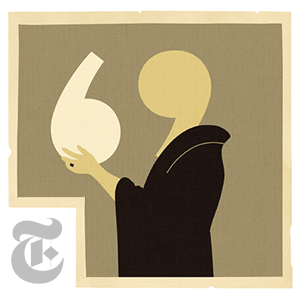
A quotation is the repetition of one expression as part of another one, particularly when the quoted expression is well-known or explicitly attributed by citation to its original source, and it is indicated by (punctuated with) quotation marks. A quotation can also refer to the repeated use of units of any other form of expression, especially parts of artistic works: elements of a painting, scenes from a movie or sections from a musical composition.
Quotations are used for a variety of reasons: to illuminate the meaning or to support the arguments of the work in which it is being quoted, to provide direct information about the work being quoted(whether in order to discuss it, positively or negatively), to pay homage to the original work or author, to make the user of the quotation seem well-read, and/or to comply with copyright law. Quotations are also commonly printed as a means of inspiration and to invoke philosophical thoughts from the reader.
Continue reading →
Posted in Language |
Leave a Comment »
March 5, 2013
‘Shooting the messenger‘ is a metaphoric phrase used to describe the act of lashing out at the (blameless) bearer of bad news. In earlier times, messages were usually delivered in person by a human envoy. Sometimes, as in war, for example, the messenger was sent from the enemy camp.
An easily provoked combatant receiving such an overture could more easily vent anger (or otherwise retaliate) on the deliverer of the unpopular message than on its author. ‘Attacking the messenger’ is a subdivision of the ad hominem logical fallacy (making an argument personally against an opponent instead of against their argument).
Continue reading →
Posted in Death, Language |
Leave a Comment »
March 5, 2013
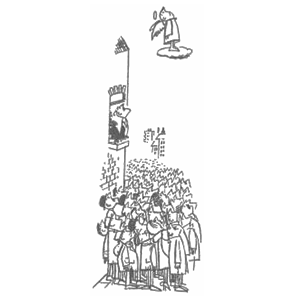
Social proof, also known as informational social influence, is a psychological phenomenon where people assume the actions of others in an attempt to reflect correct behavior for a given situation. This effect is prominent in ambiguous social situations where people are unable to determine the appropriate mode of behavior, and is driven by the assumption that surrounding people possess more knowledge about the situation.
The effects of social influence can be seen in the tendency of large groups to conform to choices which may be either correct or mistaken, a phenomenon sometimes referred to as herd behavior. Although social proof reflects a rational motive to take into account the information possessed by others, formal analysis shows that it can cause people to converge too quickly upon a single choice, so that decisions of even large groups of individuals may be grounded in very little information (i.e. information cascades). Continue reading →
Posted in Health, Science |
Leave a Comment »



