December 11, 2012
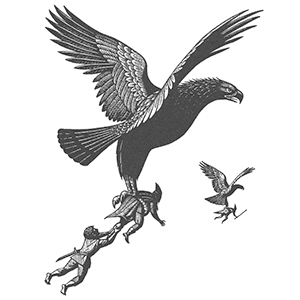
Eucatastrophe [yew-kuh-tas-truh-fee] is a term coined by J. R. R. Tolkien which refers to the sudden turn of events at the end of a story which ensure that the protagonist does not meet some terrible, impending, and very plausible doom. He formed the word by affixing the Greek prefix ‘eu,’ meaning ‘good,’ to ‘catastrophe,’ the word traditionally used in classically-inspired literary criticism to refer to the ‘unraveling’ or conclusion of a drama’s plot.
For Tolkien, the term appears to have had a thematic meaning that went beyond its implied meaning in terms of form. In his definition as outlined in his 1947 essay ‘On Fairy-Stories,’ it is a fundamental part of his conception of mythopoeia (the creation of myths). Though Tolkien’s interest is in myth, it is also connected to the gospels; Tolkien calls the Incarnation (God taking a physical form, as Jesus in Tolkien’s view) the eucatastrophe of ‘human history’ and the Resurrection the eucatastrophe of the Incarnation. Continue reading →
Posted in Art, Language |
1 Comment »
December 11, 2012
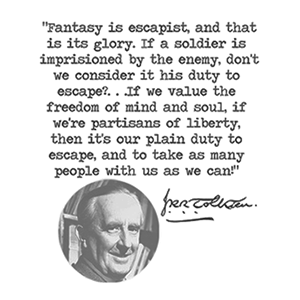
‘On Fairy-Stories‘ is an essay by J. R. R. Tolkien which discusses the fairy-tale as a literary form. It was initially written (and entitled simply ‘Fairy Stories’) for presentation by Tolkien as the Andrew Lang lecture at the University of St Andrews, Scotland, in 1939.
It first appeared in print, with some enhancement, in 1947, in a festschrift volume (a book honoring a respected person), ‘Essays Presented to Charles Williams,’ compiled by C. S. Lewis. British poet Charles Williams, a friend of Lewis’s, had been relocated with the Oxford University Press staff from London to Oxford during the London blitz in World War II. This allowed him to participate in gatherings of the Inklings (an informal literary discussion group) with Lewis and Tolkien. Continue reading →
Posted in Art, Language, Philosophy |
Leave a Comment »
December 11, 2012

Trypophobia [try-poe-phobia] (sometimes called repetitive pattern phobia) is fear of or revulsion from clustered geometric shapes, especially small holes. It is not recognized in the Diagnostic and Statistical Manual of Mental Disorders, however thousands of people claim to be fearful of objects with small holes, such as beehives, ant holes, and lotus seed heads.
Research is limited and Arnold Wilkins and Geoff Cole, who claim to be the first to scientifically investigate, believe the reaction to be based on a biological revulsion, rather than a learned cultural fear. The term was coined in 2005, a combination of the Greek ‘trypo’ (punching, drilling or boring holes) and phobia.
Posted in Health, Science |
4 Comments »
December 11, 2012

Jane Elliott (b. 1933) is an American anti-racism activist and educator (she is also a feminist and LGBT activist).
She created the famous ‘blue-eyed/brown-eyed’ exercise, first done with grade school children in the 1960s, and which later became the basis for her career in diversity training.
Continue reading →
Posted in Education, Money, Politics |
Leave a Comment »
December 10, 2012
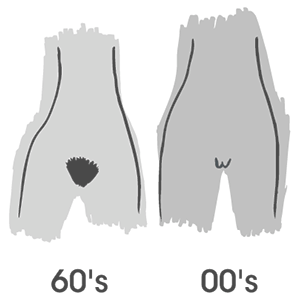
Pubic Wars, a pun on the Punic Wars, is the name given to the rivalry between the pornographic magazines Playboy and Penthouse during the 1960s and 1970s. Each magazine strove to show just a little bit more than the other, without getting too crude. The term was coined by ‘Playboy’ owner Hugh Hefner. In 1950s and 60s America it was generally agreed that nude photographs were not pornographic unless they showed pubic hair or, even worse, genitals.
‘Respectable’ photography was careful to come close to, but not cross over, this line. Consequently the depiction of pubic hair was de facto forbidden in U.S. pornographic magazines. ‘Penthouse’ originated in 1965 in Britain and was initially distributed in Europe. In 1969 it was launched in the U.S., bringing new competition to ‘Playboy.’ Due to more liberal European attitudes to nudity ‘Penthouse’ was already displaying pubic hair at the time of its U.S. launch. According to the magazine’s owner Bob Guccione, ‘We began to show pubic hair, which was a big breakthrough.’ Continue reading →
Posted in Money, Politics, Sex |
1 Comment »
December 10, 2012

Project Iceworm was the code name for a US Army Top Secret proposal during the Cold War (a study was started in 1958), to build a network of mobile nuclear missile launch sites under the Greenland ice sheet. The ultimate objective of placing medium-range missiles under the ice – close enough to Moscow to strike targets within the Soviet Union – was kept secret from the Danish government.
To study the feasibility of working under the ice, a highly publicized ‘cover’ project, known as ‘Camp Century’ was launched in 1960. However, unsteady ice conditions within the ice sheet caused the project to be cancelled in 1966. Details of the missile base project were classified for decades, and first came light in 1997, when the Danish Foreign Policy Institute (DUPI) was asked by the Danish Parliament to research the history of nuclear weapons in Greenland during the Thulegate scandal. Continue reading →
Posted in Politics, War, World |
Leave a Comment »
December 10, 2012
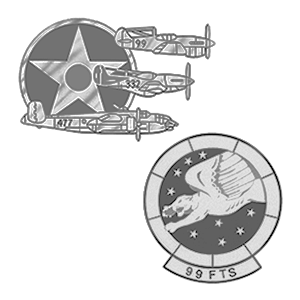
The Tuskegee [tuhs-kee-gee] Airmen is the popular name of a group of African-American pilots who fought in World War II. During World War II, African Americans in many U.S. states were still subject to discriminatory Jim Crow laws. The American military was racially segregated, as was the federal government. The Tuskegee Airmen were treated with prejudice both within and outside the army. Despite these adversities, they trained and flew with distinction. The Fighter Group saw action in Sicily and Italy, before being deployed as bomber escorts in Europe, where they were very successful.
The Tuskegee Airmen initially were equipped with Curtiss P-40 Warhawks fighter-bomber aircraft, briefly with Bell P-39 Airacobras, later with Republic P-47 Thunderbolts, and finally with the aircraft with which they became most commonly associated, the North American P-51 Mustang. When the pilots painted the tails of their P-47s and later, P-51s, red, the nickname ‘Red Tails’ was coined. Bomber crews applied a more effusive ‘Red-Tail Angels’ sobriquet. A B-25 bomb group, was forming in the U.S., but was not able to complete its training in time to see action. Continue reading →
Posted in Politics, War |
1 Comment »
December 6, 2012

The Jewish Autonomous Oblast is a federal subject of Russia (an autonomous oblast) situated in the Russian Far East, bordering China. Its administrative center is the town of Birobidzhan. Soviet authorities established the autonomous oblast in 1934. It was the result of Joseph Stalin’s nationality policy, which provided the Jewish population of the Soviet Union with a large territory in which to pursue Yiddish cultural heritage.
According to the 1939 population census, 17,695 Jews lived in the region (16% of the total population). The Jewish population peaked in 1948 at around 30,000, about one-quarter of the region’s population. The census of 1959, taken six years after Stalin’s death, revealed that the Jewish population of the JAO declined to 14,269 persons. As of 2002, 2,327 Jews were living in the JAO (1.2% of the total population), while ethnic Russians made up 90% of the population.
Continue reading →
Posted in Philosophy, World |
Leave a Comment »
December 6, 2012

Cannabinoids [kuh-nab-uh-noid] are a class of diverse chemical compounds that activate cannabinoid receptors (molecules on the surface of a cells in the brain and throughout the body, which receive chemical signals). After the receptor is engaged, multiple intracellular signal pathways are activated; researchers are still unraveling the precise mechanism at work.
Cannabinoid receptors are activated by endocannabinoids (produced naturally in the body), phytocannabinoids (found in plants), and synthetic cannabinoids (produced chemically in a lab). The most notable cannabinoid is the phytocannabinoid tetrahydrocannabinol (THC), the primary psychoactive compound of cannabis. However, there are known to exist dozens of other cannabinoids with varied effects. Before the 1980s, it was often speculated that cannabinoids produced their physiological and behavioral effects via nonspecific interaction with cell membranes, instead of interacting with specific membrane-bound receptors. Continue reading →
Posted in Drugs, Health, Science |
Leave a Comment »
December 6, 2012

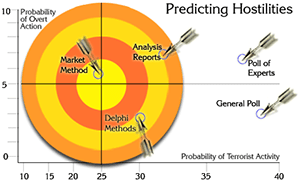
The Policy Analysis Market (PAM), part of the FutureMAP project, was a proposed futures exchange developed by the United States’ Defense Advanced Research Projects Agency (DARPA) and based on an idea first proposed by Net Exchange, a San Diego research firm specializing in the development of online prediction markets. PAM was to be ‘a market in the future of the Middle East,’ and would have allowed trading of futures contracts based on possible political developments in several Middle Eastern countries.
The theory behind such a market is that the monetary value of a futures contract on an event reflects the probability that that event will actually occur, since a market’s actors rationally bid a contract either up or down based on reliable information. One of the models for PAM was a political futures market run by the University of Iowa, which had predicted U.S. election outcomes more accurately than either opinion polls or political pundits. PAM was also inspired by the work of George Mason University economist Robin Hanson. Continue reading →
Posted in Death, Money, War |
1 Comment »
December 6, 2012

The Shockwave Rider is a 1975 science fiction novel by John Brunner, notable for its hero’s use of computer hacking skills to escape pursuit in a dystopian future, and for the coining of the word ‘worm’ to describe a program that propagates itself through a computer network. It also introduces the concept of a ‘Delphi pool’ (a large group of people used as a statistical sampling resource), perhaps derived from the RAND Corporation’s Delphi method – a futures market on world events which bears close resemblance to DARPA’s controversial and cancelled Policy Analysis Market (dubbed the ‘Terrorism Market’ by the media).
The title derives from the futurist work ‘Future Shock’ by Alvin Toffler. The hero is a survivor in a hypothetical world of quickly changing identities, fashions, and lifestyles, where individuals are still controlled and oppressed by a powerful and secretive state apparatus. His highly developed computer skills enable him to use any public telephone to punch in a new identity, thus reinventing himself. As a fugitive, he must do this from time to time in order to escape capture. The title is also a metaphor for survival in an uncertain world.
Continue reading →
Posted in Art, Language, Technology |
Leave a Comment »
December 6, 2012
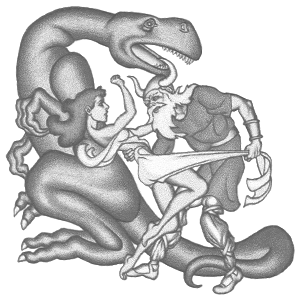
‘Sidewise in Time‘ is a science fiction short story by Murray Leinster that was first published in a 1934 issue of ‘Astounding Stories.’ In the story, professor Minott is a mathematician at Robinson College in Virginia who has determined that an apocalyptic cataclysm is fast approaching that could destroy the entire universe. The cataclysm manifests itself on June 5, 1935 (one year in the future in terms of the story’s original publication) when sections of the Earth’s surface begin changing places with their counterparts in alternate timelines.
A Roman legion from a timeline where the Roman Empire never fell appears on the outskirts of St. Louis, Missouri. Viking longships from a timeline where the Vikings settled North America raid a seaport in Massachusetts. A traveling salesman from Louisville, Kentucky finds himself in trouble with the law when he travels into an area where the South won the American Civil War. A ferry approaching San Francisco finds the flag of Czarist Russia flying from a grim fortress dominating the city. Continue reading →
Posted in Art, Language |
Leave a Comment »



