February 2, 2016

Catvertising is the use of cats in advertising. The tongue-in-cheek portmanteau was coined in the late 1990s, and enjoyed a spike in popularity beginning 2011 as a result of a parody of commercialization of cat viral videos by the advertising agency st. john in Toronto.
The video was part of a series of spoofs beginning with ‘Pink Ponies: A Case Study,’ then ‘Catvertising,’ and finally ‘Buyral’ (a blend of ‘buy’ and ‘viral’). A University of Arizona marketing team competes under the name ‘Catvertising.’
Posted in Humor, Money |
Leave a Comment »
December 17, 2015


Pieing is the act of throwing a pie at a person or people. This may be a simple practical joke, but can be a political action when the target is an authority figure, politician, or celebrity and can be used as a means of protesting against the target’s political beliefs, or against perceived arrogance or vanity. Perpetrators generally regard the act as a form of ridicule to embarrass and humiliate the victim. In most or all jurisdictions, pieing is punishable as battery, and may constitute assault as well.
In pieing, the goal is usually to humiliate the victim while avoiding actual injury. For this reason the pie is traditionally of the cream variety without a top crust, and is rarely if ever a hot pie. In Britain, a pie in the context of throwing is traditionally referred to as a ‘custard pie.’ An aluminum pie pan or paper plate filled with whipped cream or shaving foam can substitute for a real pie. Pieing and pie fights are a staple of slapstick comedy, and pie ‘tosses’ are also common charity fundraising events, especially in schools.
read more »
Posted in Food, Humor, Politics |
1 Comment »
December 12, 2015

Smell-O-Vision was a system that released odor during the projection of a film so that the viewer could ‘smell’ what was happening in the movie. The technique was created by inventor Hans Laube and made its only appearance in the 1960 film ‘Scent of Mystery,’ produced by Mike Todd, Jr., son of film producer Mike Todd. The process injected 30 odors, such as freshly-baked bread, pipe tobacco, and salty ocean air, into a movie theater’s seats when triggered by the film’s soundtrack.
The use of scents in conjunction with film dates back to 1906, before the introduction of sound. In this first instance, a 1958 issue of ‘Film Daily’ claims that Samuel Roxy Rothafel of the Family Theatre in Forest City, Pennsylvania, placed a wad of cotton wool that had been soaked in rose oil in front of an electric fan during a newsreel about the Rose Bowl Game. Arthur Mayer installed an in-theater smell system in Paramount’s Rialto Theater on Broadway in 1933, which he used to deliver odors during a film. However, it would take over an hour to clear the scents from the theater, and some smells would linger for days afterward.
read more »
Posted in Art, Humor, Technology |
Leave a Comment »
December 2, 2015
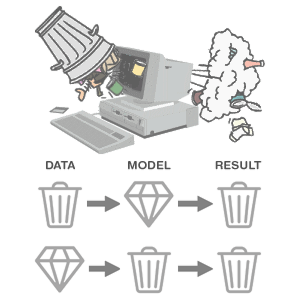
Garbage in, garbage out (GIGO) in the field of computer science or information and communications technology refers to the fact that computers, since they operate by logical processes, will unquestioningly process unintended, even nonsensical, input data (‘garbage in’) and produce undesired, often nonsensical, output (‘garbage out’). The principle applies to other fields as well.
The underlying principle was noted by the inventor of the first programmable computing device design: ‘On two occasions I have been asked, ‘Pray, Mr. Babbage, if you put into the machine wrong figures, will the right answers come out?’ … I am not able rightly to apprehend the kind of confusion of ideas that could provoke such a question.’
read more »
Posted in Humor, Language, Technology |
Leave a Comment »
November 24, 2015

Headis (Header Table Tennis) is a hybrid game that combines table tennis with soccer. Players strike a 7-inch rubber ball with their head. Physically headis is more comparable to badminton than to table tennis, but the rules are closer to table tennis with a few exceptions. Volleys (striking the ball before it hits the player’s own side) are allowed, as well as touching the table with any part of the body. Each game is played to 11 points and up to 2 sets, although a player must be ahead by two points to win each set.
The sport was invented in 2006 by René Wegner, a Saarbrücken sports science student at the time, at the ‘Wesch,’ a swimming pool in Kaiserslautern, Germany. The soccer field was occupied, which was why he and a friend started heading the ball back and forth at the table tennis table. In 2008 headis became part of the sports program at the University of Saarbrücken.
Posted in Games, Humor |
Leave a Comment »
November 20, 2015

Red mercury is a hoax substance of uncertain composition purportedly used in the creation of nuclear bombs, as well as a variety of unrelated weapons systems. It is purported to be mercuric iodide, a poisonous, odorless, tasteless, water-insoluble scarlet-red powder that becomes yellow when heated above 126 °C (258 °F), due to a thermochromatic change in crystalline structure.
However, samples of ‘red mercury’ obtained from arrested would-be terrorists invariably consisted of nothing more than various red dyes or powders of little value, which some suspect was being sold as part of a campaign intended to flush out potential nuclear smugglers. The hoax was first reported in 1979 and was commonly discussed in the media in the 1990s. Prices as high as $1,800,000 per kilogram were reported.
read more »
Posted in Humor, Science, War |
1 Comment »
November 3, 2015

QI (‘Quite Interesting’) is a British television quiz show hosted by comedian Stephen Fry. There are four contestants in each show, of whom one is always stand-up comic Alan Davies. Most of the questions are extremely obscure, making it unlikely that the correct answer will be given. To compensate, points are awarded not only for right answers, but also for interesting ones, regardless of whether they are right or even relate to the original question.
QI has stated it follows a philosophy: everything in the world, even that which appears to be the most boring, is ‘quite interesting’ if looked at in the right way.
read more »
Posted in Art, Games, Humor |
1 Comment »
October 29, 2015

You ain’t gonna need it (YAGNI) is a principle of extreme programming (XP) that states a programmer should not add functionality until deemed necessary. XP co-founder Ron Jeffries said: ‘Always implement things when you actually need them, never when you just foresee that you need them.’ Jeffries argues that prematurely adding features leads to software bloat, feature creep, and takes time away from core functionality improvement.
YAGNI is a principle behind the XP practice of ‘do the simplest thing that could possibly work’ (DTSTTCPW). It is meant to be used in combination with several other practices, such as continuous refactoring (code reorganization), continuous automated unit testing, and continuous integration (conforming code segments work within the larger codebase). However, the efficacy of YAGNI, even when considered in combination with safeguards, is controversial.
Posted in Humor, Language, Technology |
Leave a Comment »
September 19, 2015
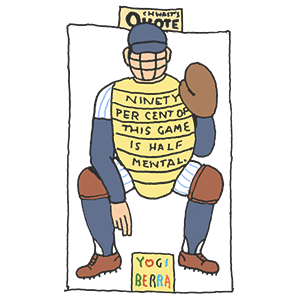
An Irish bull is a ludicrous, incongruent or logically absurd statement, generally unrecognized as such by its author. The addition of the epithet Irish is a late addition. The ‘Irish bull’ is to the sense of a statement what the dangling participle is to the syntax. A jarring or amusing absurdity is created by hastiness or lack of attention to speech or writing.
Although, strictly speaking, Irish bulls are so structured grammatically as to be logically meaningless, their actual effect upon listeners is usually to give vivid illustrations to obvious truths. Hence, as John Pentland Mahaffy, Provost of Trinity College, Dublin, famously observed, ‘an Irish bull is always pregnant,’ i.e. with truthful meaning.
read more »
Posted in Humor, Language, World |
2 Comments »
July 16, 2015

A user error is an error made by the human user of a complex system, usually a computer system, in interacting with it. Related terms such as PEBCAK (Problem Exists Between Chair And Keyboard), ID-10T error (idiot error), and other similar phrases are also used as slang in technical circles with derogatory meaning. A highly popularized example of this is a user mistaking their CD-ROM tray for a cup holder, or a user looking for the ‘any key.’
This usage implies a lack of computer savvy, asserting that problems arising when using a device are the fault of the user. Critics of the term argue that the problems are caused instead by a device that doesn’t take into account human limitations and is thus designed in a way that induces errors.
read more »
Posted in Humor, Technology |
Leave a Comment »
May 27, 2015
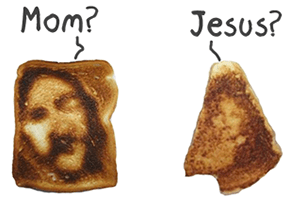

The term Lourdes [loordz] effect was coined by Belgian philosopher and skeptic Etienne Vermeersch to describe the observation that supernatural powers never manifest themselves in a completely unambiguous fashion. According to Vermeersch, should the miraculous power of Lourdes actually exist there would be no reason to think that it would be more difficult for the Virgin Mary or God to reattach a severed arm than to cure paralysis or blindness.
The accounts and photos of, for instance, the Loch Ness Monster and the Yeti lack reliability and clarity due to a similar effect. Vermeersch uses this term to mock what he calls the selective and uncritical approach to miracles, or the frivolous attribution of supernatural gifts to human beings.
Posted in Humor, Philosophy, Science |
1 Comment »
May 17, 2015

Grim Fandango is a dark comedy neo-noir adventure game released by LucasArts in 1998 for Windows, with game designer Tim Schafer as project leader. It is the first adventure game by LucasArts to use 3D computer graphics overlaid on pre-rendered, static backgrounds. As with other LucasArts adventure games, the player must converse with other characters and examine, collect, and use objects correctly to solve puzzles in order to progress.
Grim Fandango ’s world combines elements of the Aztec belief of afterlife with style aspects of film noir, including ‘The Maltese Falcon,’ ‘On the Waterfront, ‘and ‘Casablanca,’ to create the Land of the Dead, through which recently departed souls, represented in the game as calaca-like figures, must travel before they reach their final destination, the Ninth Underworld. The story follows travel agent Manuel ‘Manny’ Calavera as he attempts to save Mercedes ‘Meche’ Colomar, a newly arrived but virtuous soul, during her long journey.
read more »
Posted in Art, Games, Humor |
Leave a Comment »


 The Daily Omnivore