May 4, 2012

The cute cat theory of digital activism is a theory concerning Internet activism, Web censorship, and ‘cute cats’ (a term used for any low-value, but popular online activity) developed in 2008 by Ethan Zuckerman, director of the MIT Center for Civic Media. It posits that most people are not interested in activism; instead, they want to use the web for mundane activities, including surfing for pornography and lolcats (‘cute cats’).
The tools that they develop for that, however, are very useful to social movement activists, who often lack resources to develop dedicated tools themselves, but instead, use the tools developed by others (such as Facebook, Flickr, Blogger, Twitter, and similar platforms), even though such tools were not originally intended for activism.
read more »
Posted in Humor, Politics, Technology |
Leave a Comment »
May 4, 2012

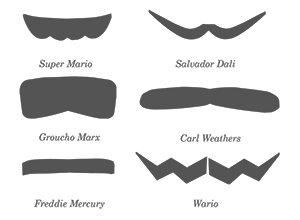
The American Mustache Institute (AMI) is an advocacy organization and registered not-for-profit based in St. Louis, Missouri. When founded in 1965, AMI was the only organization in the world working towards facial hair advocacy. AMI’s full-time staff supports a more than 700 global chapters which advocate for greater acceptance of mustaches in the workplace and throughout modern culture.
Efforts by AMI have included a 2007 campaign against ‘widespread and unacceptable discrimination in the workplace and society,’ as chronicled by media including the ‘Daily Telegraph.’
read more »
Posted in Humor, Politics |
1 Comment »
April 29, 2012

‘Earache My Eye‘ is a comedy routine and song by Cheech and Chong which features ‘Alice Bowie’ (one of Cheech Marin’s characters). It first appeared on ‘Cheech & Chong’s Wedding Album’ (1974). Cheech And Chong also lip sync to the recording (with Chong behind the drumkit) in their first movie ‘Up in Smoke’ (1978). This piece has been featured repeatedly on the ‘Doctor Demento’ radio show. According to Tommy Chong’s autobiography, the famous guitar riff is played by Gaye Delorme, who also composed the music for the song. Additionally, Chong states that drums on the song are played by famed international percussionist Airto Moreira.
The B-side, ‘Turn That Thing Down’ features the remainder of the musical track, from the point of Marin’s monologue about his wealth, without the actual dialogue, complete to its conclusion. It is possible to assemble the full-length version of the song by editing the two sections together. Several radio stations refused to play the song. Once the song hit its peak on the charts, radio station managers pulled the song out of the format of airplay, due to complaints by parents, teachers, psychologists, principals, and counselors, who stated that this song mostly appealed to junkies, dropouts, drug addicts, and drunks, as well as for students playing hooky from class, giving them a bad example of behavior.
Posted in Art, Drugs, Humor |
Leave a Comment »
April 27, 2012

Lisa Frank is an American commercial artist and founder of Lisa Frank Incorporated, headquartered in Tucson, Arizona. The artist’s work appears on various commercial elementary and middle-school products, mostly school supplies. Also common among Lisa Frank-related items are stickers and a variety of other merchandise such as clothing and toys marketed towards young girls. Frank founded the company in 1979 at the age of 24, and her success resulted from her sticker line.
The company’s headquarters is easily visible because of the bright hearts, stars, and music notes decorating the side of the building. There is currently a quarterly magazine also named ‘Lisa Frank.’ Her corporation’s artwork features extremely bright and vibrant colors, and round, smooth, reflective surfaces. A number of characters recur on ‘Lisa Frank’ branded items, such as a Hollywood Bear, and Markie the unicorn. Rainbows and especially the color purple are abundant in Lisa Frank’s art.
Posted in Art, Humor, Money |
2 Comments »
April 23, 2012
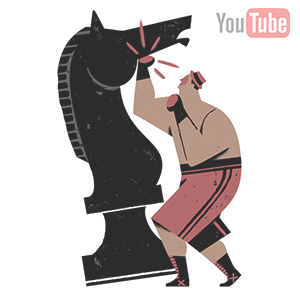
Chessboxing is a hybrid sport that combines chess with boxing in alternating rounds. The sport was invented by Dutch artist Iepe Rubingh, who was inspired by a French comic book ‘Le Froid Equateur’ by artist and filmmaker Enki Bilal. A match consists of up to eleven alternating rounds of boxing and chess. The match begins with a four-minute chess round. This is followed by three minutes of boxing, with rounds of chess and boxing alternating until the end. There is a one minute break between rounds.
Competitors may win by a knockout, achieving a checkmate, by the judges’ decision, or if their opponent’s twelve minutes of chess time is exceeded. If a competitor fails to make a move during the chess round, he is issued a warning and he must move within the next 10 seconds. Repeated warnings may result in a disqualification. The players put on headphones during the chess portion so that they do not hear any shouted assistance from the audience or the live chess commentary. If the chess game reaches a stalemate, the scores from the boxing rounds are used to determine the winner. If the boxing score is also a tie, the player with the black pieces wins.
Posted in Games, Humor |
Leave a Comment »
April 19, 2012
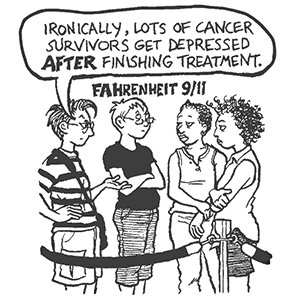
Dykes to Watch Out For (sometimes DTWOF) was a comic strip by Alison Bechdel, which ran from 1983 to 2008, and was one of the earliest ongoing representations of lesbians in popular culture and has been called ‘as important to new generations of lesbians as landmark novels like Rita Mae Brown’s ‘Rubyfruit Jungle’ (1973) and Lisa Alther’s ‘Kinflicks’ (1976) were to an earlier one.’
DTWOF chronicled the lives, loves, and politics of a fairly diverse group of characters (most of them lesbians) living in a medium-sized city in the United States, featuring both humorous soap opera storylines and biting topical commentary. The strip was carried in ‘Funny Times’ and a number of gay and lesbian newspapers. According to Bechdel, her strip was ‘half op-ed column and half endless, serialized Victorian novel.’ Characters reacted to contemporary events, including going to the Michigan Womyn’s Festival, Gay Pride parades, and protest marches and having heated discussions about day-to-day events, political issues and the way lesbian culture was changing.
Posted in Humor, Politics, Sex |
Leave a Comment »
April 19, 2012

Pornochanchada is the name given to a genre of sexploitation films produced in Brazil that was popular during the 1970s and early 1980s. ‘Chanchada’ means ‘light comedy’ in Portuguese. Pornochanchadas were initially produced in the downtown quarter of São Paulo that was nicknamed ‘Boca do Lixo’ (‘Garbage Mouth’). The genre was usually seen as a part of low-budget films produced there, collectively known as ‘cinema da Boca’ (‘movies of the Mouth’).
Later, there were productions in Rio de Janeiro as well, creating the sub-genre ‘pornochanchada carioca,’ which was to find its star in Alba Valeria during early 1980s. Pornochanchadas were generally in line with ‘sex comedies’ produced in other countries, but also featured some Brazilian peculiarities. Despite conditions of strict censorship in Brazil in that era, the state-run film company Embrafilme was generally eager to support pornochanchadas, because they weren’t critical of the government and did not depict explicit sex.
Posted in Humor, Sex, World |
Leave a Comment »
April 19, 2012
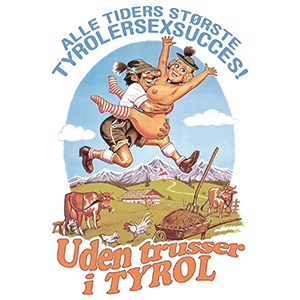
Bavarian porn is a campy subgenre of softcore porn comedy. The apogee of the genre was the late 1960s and early 1970s, corresponding roughly to the chancellorship of Willy Brandt, but these films continued to be produced up to about 1980. Today they live on as staples of late night European cable and satellite channels. Alois Brummer was the producer of many of these films.
After some ‘Report’ movies (so-called documentaries about ‘German housewifes’ or ‘schools for girls,’ as a reaction to serious documentaries about sexual items in Germany’s late 60’s) he became produced a number of films, which were mainly situated in the Alpes. Director Franz Marischka got the idea from a newspaper article in 1972 about wealthy female tourists in Bavaria who tried to seduce local young men or the landlord of the inn where they were staying.
read more »
Posted in Humor, Sex, World |
Leave a Comment »
April 18, 2012

Keep Austin Weird is the slogan adopted by the Austin Independent Business Alliance to promote small businesses in Austin, Texas. The phrase has long been believed to have been coined in 2000 by Red Wassenich, who says he made the comment after giving a pledge to an Austin radio station. He later began printing bumper stickers, and now operates the website keepaustinweird.com and published ‘Keep Austin Weird: A Guide to the Odd Side of Town.’ Despite a challenge from Wassenich, the slogan was later trademarked by Outhouse Designs and used to market T-shirts, hats, and mugs. A recently released book on the topic, ‘Weird City,’ discusses the cultural evolution of the movement as well as its commercialization and socio-political significance.
Austin is the self-proclaimed ‘live music capital of the world’ and the people of Austin reflect a friendly, accepting culture of artistic and individual expression that maintains the city as a vibrant and eclectic creative center and haven for an LGBT community, intellectual community, community of naturalists and environmentalists, and for subcultures and people(s) who are not mainstream. In a mostly conservative Texas, Austin is ‘Weird’ because of that and because it continues to be liberal and progressive politically, socially, in culture, in the arts and in music, among other things. ‘Keep Austin Weird’ moves beyond a mere slogan, to reflect the dynamics that encompass Austin.
Posted in Humor, Money, Politics |
Leave a Comment »
April 16, 2012

The Residents are an American art collective best known for avant-garde music and multimedia works. The first official release under the name of The Residents was in 1972, and the group has since released over sixty albums, numerous music videos and short films, three CD-ROM projects and ten DVDs. They have undertaken seven major world tours and scored multiple films. Throughout the group’s existence, the individual members have ostensibly attempted to operate under anonymity, preferring instead to have attention focused on their art output.
Much outside speculation and rumor has focused on this aspect of the group. In public, the group appears silent and costumed, often wearing eyeball helmets, top hats and tuxedos – a long-lasting costume now recognized as their signature iconography. Their albums generally fall into two categories: deconstructions of Western popular music, or complex conceptual pieces, composed around a theme, theory or plot. They are noted for surrealistic lyrics and sound, disregard for conventional music composition, and the over the top, theatrical spectacle of their live performances.
read more »
Posted in Art, Humor |
Leave a Comment »
April 10, 2012
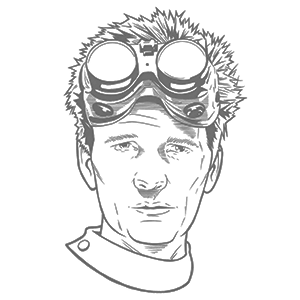
Dr. Horrible’s Sing-Along Blog is a 2008 musical tragicomedy miniseries in three acts, produced exclusively for Internet distribution. Filmed and set in Los Angeles, the show tells the story of Dr. Horrible (played by Neil Patrick Harris), an aspiring supervillain; Captain Hammer (Nathan Fillion), his nemesis; and Penny (Felicia Day), their shared love interest.
The movie was written by writer/director Joss Whedon, his brothers Zack Whedon (a television writer) and Jed Whedon (a composer), and Jed’s wife, actress Maurissa Tancharoen. The team wrote the musical during the 2007–2008 Writers Guild of America strike. The idea was to create something small and inexpensive, yet professionally done, in a way that would circumvent the issues that were being protested during the strike.
Posted in Art, Humor, Money |
1 Comment »
April 10, 2012

The Second City is an improvisational comedy enterprise which originated in Chicago’s Old Town neighborhood. The Second City Theatre opened in late 1959 and has since expanded its presence to several other cities, including Toronto and Los Angeles.
The Second City has produced television programs in both the United States and Canada including ‘SCTV,’ ‘Second City Presents’, and ‘Next Comedy Legend,’ as well as being heavily involved in the creation of the satirical 1969 science fiction film ‘The Monitors.’ Since its debut, the Second City has consistently been a starting point for comedians, award winning actors, directors, and others in show business.
read more »
Posted in Art, Games, Humor |
Leave a Comment »



 The Daily Omnivore