September 8, 2012

George Dantzig (1914 – 2005) was an American mathematical scientist who solved two unsolved problems in statistical theory, which he had mistaken for homework after arriving late to a lecture of UC Berkeley statistician Jerzy Neyman. Dantzig was the Professor Emeritus of Transportation Sciences and Professor of Operations Research and of Computer Science at Stanford.
Born in Portland, Oregon, George Bernard Dantzig was named after George Bernard Shaw, the Irish writer. His father, Tobias Dantzig, was a Baltic German mathematician and linguist, and his mother, Anja Dantzig (née Ourisson), was a French linguist. Dantzig’s parents met during their study at the Sorbonne, where Tobias studied mathematics under Henri Poincaré.
read more »
Posted in Education, Money, Science |
Leave a Comment »
September 8, 2012
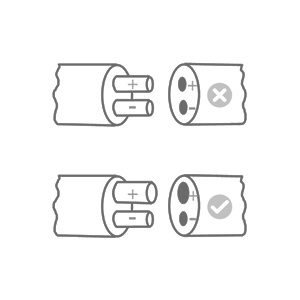
Poka-yoke is a Japanese term that means ‘fail-safing’ or ‘mistake-proofing.’ A poka-yoke is any mechanism in a lean manufacturing process that helps an equipment operator avoid (‘yokeru’) mistakes (‘poka’).
Its purpose is to eliminate product defects by preventing, correcting, or drawing attention to human errors as they occur. The concept was formalized, and the term adopted, by Shigeo Shingo as part of the Toyota Production System. It was originally described as ‘baka-yoke,’ but as this means ‘fool-proofing’ (or ‘idiot-proofing’) the name was changed to the milder poka-yoke. More broadly, the term can refer to any behavior-shaping constraint designed into a process to prevent incorrect operation by the user.
read more »
Posted in Money, Technology, World |
Leave a Comment »
September 8, 2012
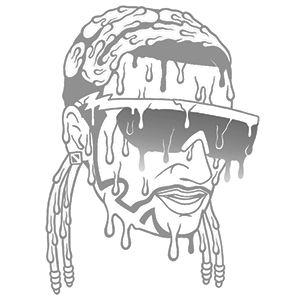
Jody Christian (b. 1985), best known by his stage name RiFF RaFF, is an American rapper and performance artist from Houston. He is signed to the Mad Decent record label. He is best known for his initial associations with Soulja Boy, and being a member of the comedy super group Three Loco with Andy Milonakis and Simon Rex.
Riff Raff started his social media involvement as a rapper on Myspace, using the name ‘Kokayne Dawkinz.’ His first public appearance was not as a rapper, but as a contestant on the 2009 MTV reality show From ‘G’s to Gents’ (season 2). Though he was eliminated from series on the second episode, he used this exposure to publicize his career as a rapper. Two years later, he was said to be signed to the Soulja Boy’s Stacks on Deck Entertainment label in 2011, and added ‘SODMG’ to his name for a period. This was later said to be false in an interview by Soulja Boy.
Posted in Art, Humor, Money |
1 Comment »
September 7, 2012

The Thin Ideal is the concept of the idyllically slim female body. The common perception of this ideal is that of a slender, feminine physique with a small waist and little body fat. The size of the thin ideal is decreasing while the rate of female obesity is simultaneously increasing, making this iconic body difficult for women to maintain. This creates a gap between the actual appearance of an average woman’s body and its expected appearance which, depending on the extent to which the ideal is internalized, may have serious psychological effects.
The degree to which women are psychologically affected by the thin ideal depends to what extent the ideal is internalized. An article from the ‘Eating Disorders Journal’ states that ‘thin ideal internalization is the extent to which an individual ‘buys into’ socially defined ideals of attractiveness and engages in behaviors designed to approximate these ideals.’ Women generally relate the ideally thin body to positive life outcomes such as happiness, confidence, and romantic success, and consequently a majority of women value the thin ideal to some extent.
read more »
Posted in Health, Money, Politics |
1 Comment »
September 5, 2012

Emotional contagion is the tendency to catch and feel emotions that are similar to and associated with those of others. One view developed by Elaine Hatfield, John Cacioppo, and Richard Rapson of the underlying mechanism is that it represents a tendency to mimic and synchronize facial expressions, vocalizations, postures, and movements with those of another person automatically and, consequently, to converge emotionally.
A broader definition of the phenomenon was suggested by Schoenewolf—’a process in which a person or group influences the emotions or behavior of another person or group through the conscious or unconscious induction of emotion states and behavioral attitudes.’
read more »
Posted in Health, Money, Science |
Leave a Comment »
August 31, 2012
Make It Right, or Make It Right Foundation New Orleans, is a foundation dedicated to rebuilding New Orleans in the aftermath of 2005’s Hurricane Katrina, which flooded the city. In late 2006, Brad Pitt founded Make It Right to rebuild 150 safe, energy-efficient and affordable homes for families from New Orleans Lower 9th Ward who lost everything to Hurricane Katrina.
By 2011, Make It Right completed 75 homes. The homes are inspired by Cradle to Cradle Design (models human industry on nature’s processes in which materials are viewed as nutrients circulating in healthy, safe metabolisms), with an emphasis on high-quality design, while preserving the spirit of the community’s culture.
Posted in Money, Politics |
Leave a Comment »
August 25, 2012

The Livestrong wristband (stylized as LIVESTRONG) is a yellow silicone gel bracelet launched in 2004 as a fund-raising item for the Lance Armstrong Foundation, founded by cyclist and cancer survivor Lance Armstrong. The bracelet itself was developed by Nike and their ad agency Wieden+Kennedy. The bracelet is part of the ‘Wear Yellow Live Strong’ educational program. The program is intended to raise money for cancer research, raise cancer awareness, and encourage people to live life to the fullest.
The bracelet sells individually, as well as in packs of 10, 100, and 1,200 as part of an effort to raise $25.1 million for the Lance Armstrong Foundation in cooperation with Nike who manufactures the bracelets in manufacturing plants both domestic and foreign and sells the bracelets through their Nike outlets worldwide. This target was achieved within 6 months, and there have now been 80 million Livestrong bracelets sold to date. Yellow was chosen for its importance in professional cycling, as it is the color of the yellow jersey worn by the leader of the Tour de France, which Armstrong won seven consecutive times.
Posted in Games, Health, Money |
1 Comment »
August 24, 2012
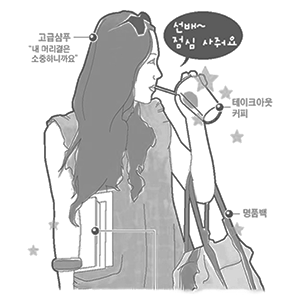
Doenjang girl is a satirical Korean expression for girls and young women who are addicted to luxury and vanity. Doenjang is a fermented soybean paste used to make sour of bean soup.
Instead of visiting an expensive foreign restaurant they will eat a three dollar bowl of soup and then go to Starbucks to purchase a six dollar latte, because carrying a Starbucks cup is considered posh. Likewise, doejang girls carry around shopping bags from Chanel and other high end stores to look as if they were shopping there.
Posted in Money, World |
Leave a Comment »
August 23, 2012

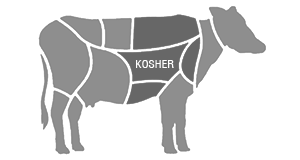
Hebrew National is a brand of kosher hot dogs and sausages made by ConAgra Foods, Inc. The Hebrew National Kosher Sausage Factory, Inc. was founded on East Broadway, on the Lower East Side of Manhattan in 1905. The company was founded by Theodore Krainin, who emigrated from Russia in the 1880s. In a 1921 article, Alfred W. McCann writing in ‘The Globe and Commercial Advertiser’ citied Hebrew National as having ‘higher standards than the law requires.’
McCann wrote the article during a crusade for commercial food decency standards, in which ‘The Globe’ was prominent. He wrote ‘More power to Krainin and the decency he represents! Such evidence of the kind of citizenship which America should covet is not to be passed by lightly.’ Hebrew National ‘served the Jewish neighborhoods of immigrants from Eastern Europe and Germany and soon developed a favorable reputation among the other Jewish residents of New York City.’
read more »
Posted in Food, Money, Philosophy |
Leave a Comment »
August 22, 2012

The Sinclair C5 is a battery electric vehicle invented by British entrepreneur Sir Clive Sinclair in the United Kingdom in 1985. The vehicle is a battery-assisted tricycle steered by a handlebar beneath the driver’s knees. Powered operation is possible making it unnecessary for the driver to pedal.
Its top speed of 15 miles per hour (24 km/h), is the fastest allowed in the UK without a driving licence. It is powered by a 200w or 250W motor. It sold for £399 plus £29 for delivery. It became an object of media and popular ridicule during 1980s Britain and was a commercial disaster, selling only around 17,000 units, although according to Sinclair, it was ‘the best selling electric vehicle’ until 2011 when the Nissan Leaf had sold over 20,000 units.
read more »
Posted in Money, Technology, World |
Leave a Comment »
August 22, 2012
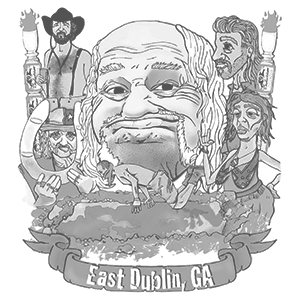
The Redneck Games are held in East Dublin, Georgia annually. The games were started by the general manager of WQZY, Mac Davis, in response to a comment made by the media; that when the 1996 Olympic Games went to Atlanta, it would be held by a group of rednecks. Taking offense to this, Davis and some locals set up the annual Redneck Games to reinforce the stereotype the media held. In 2001, Drew Scott of Wild Country 96.5 ‘borrowed’ the games to set up a fundraising event for the Franklin County NY Make-A-Wish Foundation.
Some events that are held during the Redneck Games include: The cigarette flip; Bobbing for pig’s trotters; Seed spitting; Toilet seat throwing; Mud pit belly flop; Big-hair contest; Wet T-shirt contest; Armpit serenade; Bug zapping by spitball; Dumpster diving; and Hubcap hurling. For each of the events, a trophy is awarded: a half crushed, empty mounted beer can. The Minto Canadian Redneck Games in Minto, Ontario started in 2006. Events include: Mud Pit Slip & Slide; Bobbin’ for Pig’s Feet; Mud Pit Tug-of-War; Mud Pit Belly Flop Contest; Redneck Horseshoes; Hubcap Hurl; and Mud Pit Volleyball.
Posted in Games, Humor, Money |
Leave a Comment »
August 22, 2012
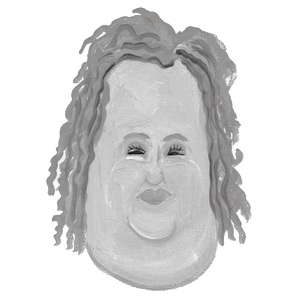
Here Comes Honey Boo Boo is an American reality series that debuted on TLC in 2012. It is a spinoff of ‘Toddlers & Tiaras,’ based around T&T contestant Alana ‘Honey Boo Boo’ Thompson and her family, who reside in rural McIntyre, Georgia. The series follows the Thompsons, focusing on the daily interactions between the family members and mother June’s attempts to enter Alana into beauty pageants. Other focal points in the series are the teen pregnancy of eldest daughter Anna, Jessica’s attempts to lose weight, as well as visits to the Redneck Games and auctions.
The ‘A.V. Club’ called the first episodes a ‘horror story posing as a reality television program,’ with others worrying about potential child exploitation. A reviewer for ‘Forbes’ criticized TLC as trying to ‘portray Alana’s family as a horde of lice-picking, lard-eating, nose-thumbing hooligans south of the Mason-Dixon line,’ stating that ‘it falls flat, because there’s no true dysfunction here, save for the beauty pageant stuff.’ ‘The Guardian’ also criticized the attempt to portray the Thompsons as something to ‘point and snicker at,’ saying, ‘none of the women or girls who participate in the show seems to hate themselves for their poverty, their weight, their less-than-urbane lifestyle, or the ways in which they diverge from the socially-acceptable beauty standard.’
Posted in Games, Humor, Money |
Leave a Comment »


 The Daily Omnivore