June 28, 2011

The Demon Core was the nickname given to a 6.2-kilogram (14 lb) subcritical mass of plutonium that accidentally went briefly critical in two separate accidents at the Los Alamos laboratory in 1945 and 1946. Both incidents resulted in the acute radiation poisoning and the subsequent death of a scientist.
After these incidents, the sphere of plutonium was referred to as the Demon Core. The core was used in an atomic bomb test in 1946, five weeks after the second fatal accident, and proved in practice to have a slightly increased yield over similar cores which had not been subjected to criticality excursions.
read more »
Posted in Health, Technology, War |
1 Comment »
June 28, 2011

The iBOT is a very stable and mobile powered wheelchair developed by Dean Kamen in a partnership between DEKA and Johnson and Johnson’s Independence Technology division. It is a medical technology, made to help people with severe mobility problems.
As of 2006 the iBOT retailed for approximately $26,100 and required a prescription in the U.S. As of 2009, it is no longer available for sale from Independence Technology, but support for existing units will be available until the end of 2013.
read more »
Posted in Health, Technology |
1 Comment »
June 28, 2011

Penguin sweaters, also known as penguin jumpers, are sweaters which are knitted for penguins that are caught in oil slicks. When an oil spill affects penguins they are dressed in knitted sweaters to stop them preening their feathers and to keep them warm, since the spilled oil destroys their natural oils. This prevents them from poisoning themselves by ingesting the oil.
The sweaters are removed and discarded as soon as the penguins can be washed. The original project is completed, but the knitting pattern is still available on-line. A similar penguin wetsuit has been made for a penguin who lost his feathers, and similar garments are being made for battery cage chicken rehabilitation.
Posted in Politics, Technology |
Leave a Comment »
June 28, 2011

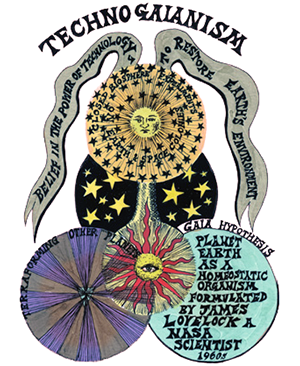
Technogaianism [tek-noh-guy-uh-niz-uhm] is a ‘bright green’ environmentalist stance of active support for the research, development and use of emerging and future technologies to help restore Earth’s environment. Technogaians argue that developing safe, clean, alternative technology should be an important goal of environmentalists.
This point of view is different from the default position of radical environmentalists and a common opinion that all technology necessarily degrades the environment, and that environmental restoration can therefore occur only with reduced reliance on technology. Technogaians argue that technology gets cleaner and more efficient with time.
read more »
Posted in Science, Technology, World |
Leave a Comment »
June 28, 2011

Bright green environmentalism is an ideology based on the belief that the convergence of technological change and social innovation provides the most successful path to sustainable development.
The term, first coined in 2003 by writer Alex Steffen, refers to the fast-growing new wing of environmentalism, distinct from traditional forms. Bright green environmentalism aims to provide prosperity in an ecologically sustainable way through the use of new technologies and improved design.
read more »
Posted in Science, Technology, World |
1 Comment »
June 27, 2011

Neophile [nee-uh-fahyl] is a term used by counterculture cult writer Robert Anton Wilson to describe a particular type of personality. A neophile or neophiliac can be defined as a personality type characterized by a strong affinity for novelty.
Neophiles/Neophiliacs have the following basic characteristics: The ability to adapt rapidly to extreme change. A distaste or downright loathing of tradition, repetition, and routine. A tendency to become bored quickly with old things. A desire, bordering on obsession in some cases, to experience novelty. A corresponding and related desire to create novelty by creating or achieving something and/or by stirring social or other forms of unrest.
read more »
Posted in Language, Philosophy, Technology |
Leave a Comment »
June 27, 2011

Zombie Nation is a German techno and electro project of the Munich based DJ and producer Florian Senfter (also known as John Starlight). The first Zombie Nation five track EP was released in the spring of 1999 on DJ Hell’s label, International DeeJay Gigolo Records.
A remix of the song ‘Kernkraft 400’ on this debut release landed in high chart-positions all over the world, including number 2 in the U.K. ‘Kernkraft 400’ was a 1:1 melody copy from the Commodore C64 computer game ‘Lazy Jones.’
read more »
Posted in Art, Money, Technology |
Leave a Comment »
June 23, 2011

Net cafe refugees (also known as cyber-homeless) is a term for a growing class of homeless people in Japan who do not own or rent a residence and thus have no permanent address and sleep in 24 hour Internet cafés or manga cafés. Some internet cafes offer free showers and sell underwear and other personal items, enabling net cafe refugees to use the internet cafes like a hotel or hostel.
A Japanese government study estimated that over 5,400 people are spending at least half of their week staying in net cafes. It has been alleged that this phenomenon is part of an increasing wealth gap in Japan, which has historically been a very economically equal society. Another word for Net cafe refugees is Cyber-homeless, a Japanese word based on English. Typically, the cyber-homeless are unemployed or underemployed and cannot afford to rent even the cheapest apartment, which is more than the cost per month to rent an internet booth daily. The cyber-homeless may use the address of the internet cafe on resumes.
Posted in Money, Technology, World |
Leave a Comment »
June 23, 2011

The dolly zoom effect is an unsettling in-camera special effect that appears to undermine normal visual perception in film. In its classic form, the camera is pulled away from a subject while the lens zooms in, or vice-versa.
Thus, during the zoom, there is a continuous perspective distortion, the most directly noticeable feature being that the background appears to change size relative to the subject.
read more »
Posted in Art, Language, Technology |
Leave a Comment »
June 23, 2011

The Ken Burns effect is a popular name for a type of panning and zooming effect used in video production from still imagery. The name derives from extensive use of the technique by American documentarian Ken Burns. The technique predates his use of it, but his name has become associated with the effect in much the same way as Alfred Hitchcock is associated with the Hitchcock zoom.
The name ‘The Ken Burns Effect’ was used by Apple in 2003 for a feature in its iMovie 3 software. The feature enables a widely used technique of embedding still photographs in motion pictures, displayed with slow zooming and panning effects, and fading transitions between frames.
read more »
Posted in Art, Technology |
Leave a Comment »
June 23, 2011

Pickover stalks are certain kinds of details to be found empirically in the Mandelbrot set, in the study of fractal geometry. They are so named after the researcher Clifford Pickover, whose ‘epsilon cross’ method was instrumental in their discovery. An ‘epsilon cross’ is a cross-shaped orbit trap, which is a method of coloring fractal images based upon how close an iterative function, used to create the fractal, approaches a geometric shape, called a ‘trap.’ Pickover hit on the novel concept of looking to see how closely the orbits of interior points come to the x and y axes. In these pictures, the closer that the point approaches, the higher up the color scale, with red denoting the closest approach. The logarithm of the distance is taken to accentuate the details.
Biomorphs are biological-looking Pickover Stalks. At the end of the 1980s, Pickover developed biological feedback organisms similar to Julia sets and the fractal Mandelbrot set. He described an algorithm which could be used for the creation of diverse and complicated forms resembling invertebrate organisms. The shapes are complicated and difficult to predict before actually experimenting with the mappings. He hoped these techniques would encourage others to explore further and discover new forms, by accident, that are on the edge of science and art. Pickover’s biomorphs show a self-similarity at different scales and illustrate a significant feature of feedback in dynamical systems. Real systems, such as human beings and mountain ranges, also show self-similarity at different scales.
Posted in Art, Technology |
Leave a Comment »
June 23, 2011

Helmholtz [helm-hohlts] resonance is the phenomenon of air resonance in a cavity, such as when one blows across the top of an empty bottle. The name comes from a device created in the 1850s by Hermann von Helmholtz, the ‘Helmholtz resonator,’ which he, the author of the classic study of acoustic science, used to identify the various frequencies or musical pitches present in music and other complex sounds.
When air is forced into a cavity, the pressure inside increases. When the external force pushing the air into the cavity is removed, the higher-pressure air inside will flow out. However, this surge of air flowing out will tend to over-compensate, due to the inertia of the air in the neck, and the cavity will be left at a pressure slightly lower than the outside, causing air to be drawn back in. This process repeats with the magnitude of the pressure changes decreasing each time.
read more »
Posted in Art, Science, Technology |
Leave a Comment »




