January 3, 2013

Espresso [e-spres-oh] is a type of Italian coffee that is concentrated. It is brewed by forcing a small amount of nearly boiling water under pressure through finely ground coffee beans.
Espresso often has a thicker consistency than coffee brewed by other methods, a higher concentration of suspended and dissolved solids, and crema (meaning cream, but being a reference to the foam with a creamy texture that forms as a result of the pressure). Because espresso is so strong, it is usually mixed with with milk (steamed, wet foamed, or dry foamed) or hot water (e.g. latte, cappuccino, macchiato, mocha, or americano).
read more »
Posted in Food, World |
Leave a Comment »
January 3, 2013
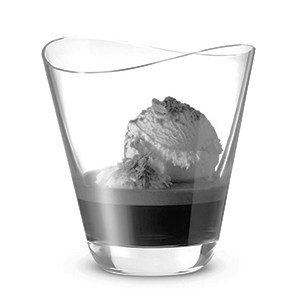
An affogato [ahf-foh-gah-toe] (Italian, ‘drowned’) is a coffee-based beverage.
It usually takes the form of a scoop of vanilla gelato or ice cream topped with a shot of hot espresso. Some variations also include a shot of Amaretto or other liqueur.
Posted in Food |
Leave a Comment »
January 2, 2013
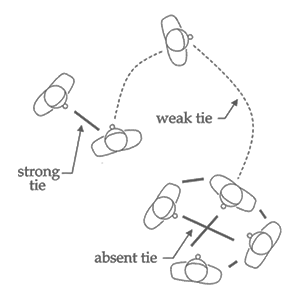
Heterophily [het-er-uh-fil-ee], or ‘love of the different,’ is the tendency of individuals to collect in diverse groups; it is the opposite of homophily (‘love of the same,’ the tendency of individuals to associate and bond with similar others). This phenomenon is notable in successful organizations, where the resulting diversity of ideas is thought to promote an innovative environment. Recently it has become an area of social network analysis. Most of the early work in heterophily was done in the 1960s by sociologist Everett Rogers in his book ‘Diffusion Of Innovations.’
Rogers showed that heterophilious networks were better able to spread innovations. Later, scholars such as Paul Burton, draw connections between modern Social Network Analysis as practiced by Stanford sociologist Mark Granovetter in his theory of weak ties (if A is linked to both B and C, then there is a greater-than-chance probability that B and C are linked to each other) and the work of German sociologist Georg Simmel. Burton found that Simmel’s notion of ‘the stranger’ is equivalent to Granovetter’s weak tie in that both can bridge homophilious networks, turning them into one larger heterophilious network.
Posted in Language, Science, Technology |
Leave a Comment »
January 2, 2013

The friendship paradox is the phenomenon first observed by the sociologist Scott L. Feld in 1991 that most people have fewer friends than their friends have, on average. It can be explained as a form of sampling bias (e.g. non-random sample) in which people with greater numbers of friends have an increased likelihood of being observed among one’s own friends. In contradiction to this, most people believe that they have more friends than their friends have.
The same observation can be applied more generally to social networks defined by other relations than friendship: for instance, most people’s sexual partners have (on the average) a greater number of sexual partners than they have. In spite of its apparently paradoxical nature, the phenomenon is real, and can be explained as a consequence of the general mathematical properties of social networks.
read more »
Posted in Health, Science, Technology |
Leave a Comment »
January 2, 2013
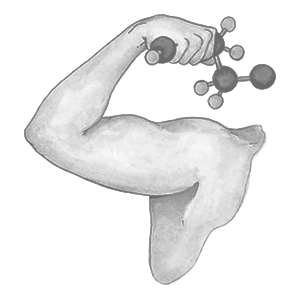
Conjugated [kon-juh-gey-tid] linoleic [li-noh-lee-ik] acids (CLA) are a family acids found mostly in the meat and dairy products derived from ruminants. CLAs can be either cis- or trans-fats.
In 1979, researchers from the University of Wisconsin applied a beef extract to mice skin. The mice were then exposed to a strong carcinogen. When the researchers counted the number of tumors developed by the mice 16 weeks later, they found to their surprise that the mice exposed to the beef extract had 20% fewer tumors. The identity of this anticarcinogen was not discovered until almost a decade later, in 1987.
read more »
Posted in Drugs, Food, Health |
Leave a Comment »
January 2, 2013

In his online essay ‘Digital Maoism: The Hazards of the New Online Collectivism,’ in ‘Edge’ magazine in 2006, futurist Jaron Lanier criticized the sometimes-claimed omniscience of collective wisdom (including examples such as the Wikipedia article about himself), describing it as ‘digital Maoism.’
He writes ‘If we start to believe that the Internet itself is an entity that has something to say, we’re devaluing those people [creating the content] and making ourselves into idiots.’ His criticism aims at several targets which are at different levels of abstraction: any attempt to create one final authoritative bottleneck which channels the knowledge onto society is wrong, regardless whether it is a Wikipedia or any algorithmically created system producing meta information.
read more »
Posted in Politics, Technology |
Leave a Comment »
January 2, 2013
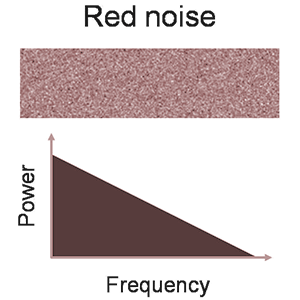
Noises are classified based on their spectral properties; they are named for the color they most resemble in the visible light spectrum. If the sound wave pattern of ‘red noise’ were translated into light waves, the resulting light would be red, and so on. White noise is an audio signal that contains all the frequencies audible to the human ear. It is analogous to white light, which contains all the colors of light visible to the human eye.
Pink noise is a signal that is louder at low frequencies and decreases at a constant rate. It is sometimes referred to as flicker noise particularly when it describes background noise emitted by an electronic device. Pink noise is used to make music, sound effects, or merely as a pleasant background sound and is reported to sound more like the ocean than white noise (which is often compared to the sound of rainfall or TV static) because of its bias towards lower frequencies.
read more »
Posted in Language, Science, Technology |
Leave a Comment »
January 1, 2013
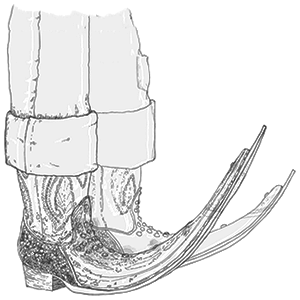
Mexican pointy boots (botas picudas mexicanas) are a style of pointed fashion boots made with elongated toes. The boots are said to have originated in Matehuala in the Mexican state of San Luis Potosí. The came to popularity at the same time as ‘tribal guarachero’ music (‘a mixture of Pre-Columbian and African sounds mixed with fast cumbia bass and electro-house beats’). and the boots have become a preferred footwear for the all-male troupes that dance to the tribal music. They are made by elongating normal boots by as much as 5 feet (1.5 m), causing the toes to curl up toward the knees. Decorative alterations incorporate paint and sequins and can go as far as adding flashing LED lights, disco balls and even mirrors.
Boys and men that wear the pointy boots have formed all-male troupes to compete in danceoffs at local nightclubs to tribal music. Participants in the contests spend weeks choreographing their dance moves and fabricating their outfits which commonly include ‘matching western shirts and skinny jeans to accentuate their footwear.’ In Matehuala, prize money ranges from $100 to $500. The prize often includes a bottle of whiskey. The dance troupes have reportedly become so popular that they are being ‘hired to dance at weddings, for quinceañeras, celebrations of the Virgin of Guadalupe, bachelorette parties, and even rosary ceremonies for the dead.’
Posted in Art, Humor, World |
Leave a Comment »
January 1, 2013

A transglutaminase is an enzyme first described in 1959 which creates extensively cross-linked, generally insoluble protein polymers (indispensable for organisms to create barriers and stable structures). Examples are blood clots as well as skin and hair. In commercial food processing, transglutaminase is used to bond proteins together. Examples of foods made using the enzyme include imitation crabmeat, and fish balls. It is produced by bacterial fermentation in commercial quantities or extracted from animal blood, and is used in a variety of processes, including the production of processed meat and fish products.
Transglutaminase can be used as a binding agent to improve the texture of protein-rich foods such as surimi (fish paste) or ham. Transglutaminase is also used in molecular gastronomy to meld new textures with existing tastes. Besides these mainstream uses, transglutaminase has been used to create some unusual foods. British chef Heston Blumenthal is credited with the introduction of transglutaminase into modern cooking. Wylie Dufresne, chef of New York’s avant-garde restaurant wd~50, was introduced to transglutaminase by Blumenthal, and invented a ‘pasta’ made from over 95% shrimp thanks to transglutaminase.
Posted in Food, Science |
Leave a Comment »


 The Daily Omnivore