February 6, 2012

False consciousness is the Marxist thesis that material and institutional processes in capitalist society are misleading to the proletariat, and to other classes. These processes betray the true relations of forces between those classes, and the real state of affairs regarding the development of pre-socialist society (relative to the secular development of human society in general).
In Marxist theory, false consciousness is essentially a result of ideological control which the proletariat either do not know they are under or which they disregard with a view to their own POUM (probability/possibility of upward mobility). POUM or something like it is required in economics with its presumption of rational agency; otherwise wage laborers would be the conscious supporters of social relations antithetical to their own interests, violating that presumption.
Continue reading →
Posted in Money, Politics |
1 Comment »
February 6, 2012

A sleeper hit refers to a film, book, single, album, TV show, or video game that gains unexpected success or recognition. Sleeper hits often grow in popularity over time. Some sleeper hits achieve unexpected success at the box office immediately upon their initial theatrical release, but this is not typical. Because these films are not expected to do particularly well they often receive little promotion or advertising and take time to register with the public.
Typically the sleeper hit relies instead on positive ‘word of mouth’ as well as the publicity generated by awards and good reviews. Two good examples of these are Mike Judge’s ‘Office Space’ and ‘Idiocracy,’ both of which quickly became cult classics. The movie ‘Caddyshack’ is another good example.
Continue reading →
Posted in Art, Language, Money |
1 Comment »
February 6, 2012
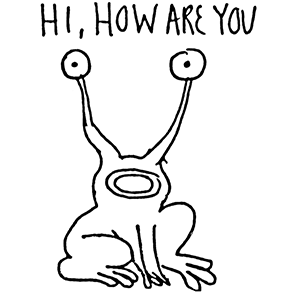
New sincerity is a term that has been used in music, aesthetics, film criticism, poetry, literary criticism and philosophy, generally to describe art or concepts that run against prevailing modes of postmodernist irony or cynicism. ‘New Sincerity’ was used as a collective name for a loose group of alternative rock bands, centered in Austin, Texas in the years from about 1985 to 1990, who were perceived as reacting to the ironic outlook of then-prominent music movements like punk rock and New Wave.
The use of ‘New Sincerity’ in connection with these bands began with an off-handed comment by Austin punk rocker/author Jesse Sublett to his friend, local music writer Margaret Moser: ‘All those new sincerity bands, they’re crap.’
Continue reading →
Posted in Art, Humor, Language |
Leave a Comment »
February 6, 2012


A cult following is a group of fans who are highly dedicated to a specific area of pop culture. A film, book, band, or video game, among other things, will be said to have a cult following when it has a small but very passionate fan base. A common component of cult followings is the emotional attachment fans have with the object of the cult following, often identifying themselves and other fans as members of a community.
Cult followings are also commonly associated with niche markets. Cult media are often associated with underground culture, and are considered too eccentric, bizarre, controversial or anti-establishment to be appreciated by the general public. Continue reading →
Posted in Art, Language, Money |
Leave a Comment »
February 6, 2012

A cult film, also commonly referred to as a cult classic, is a film that has acquired a highly devoted but specific group of fans. Often, cult movies have failed to achieve fame outside the small fanbases; however, there have been exceptions that have managed to gain fame among mainstream audiences. Many cult movies have gone on to transcend their original cult status and have become recognized as classics; others are of the ‘so bad it’s good’ variety and are destined to remain in obscurity.
Cult films often become the source of a thriving, obsessive, and elaborate subculture of fandom, hence the analogy to cults. However, not every film with a devoted fanbase is necessarily a cult film. Usually, cult films have limited but very special, noted appeal. Cult films are often known to be eccentric, often do not follow traditional standards of popular cinema and usually explore topics not considered in any way mainstream—yet there are examples that are relatively normal. Many are often considered controversial because they step outside standard narrative and technical conventions. Continue reading →
Posted in Art, Language, Money |
1 Comment »
February 6, 2012
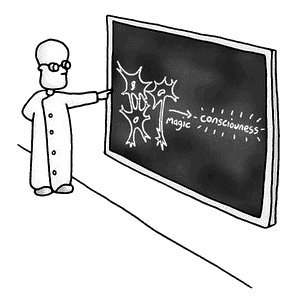
The explanatory gap is the difficulty that physicalist theories have in explaining how physical properties give rise to the way things feel when they are experienced. It is the claim that consciousness and human experiences such as qualia (individual instances of subjective, conscious experience) cannot be fully explained just by identifying the corresponding physical (neural) processes.
Bridging this gap is known as ‘the hard problem.’ The explanatory gap has vexed and intrigued philosophers and AI researchers alike for decades and caused considerable debate. Continue reading →
Posted in Education, Philosophy, Science |
1 Comment »
February 6, 2012
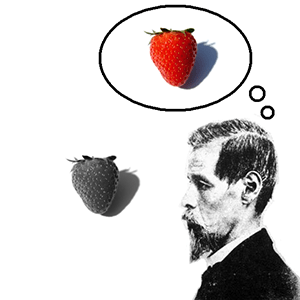
Qualia [kwah-lee-uh], singular ‘quale’ [kwah-lee], from a Latin word meaning for ‘what sort’ or ‘what kind,’ is a term used in philosophy to refer to subjective conscious experiences as ‘raw feels.’ Examples of qualia are the pain of a headache, the taste of wine, the experience of taking a recreational drug, or the perceived redness of an evening sky.
American philosopher Daniel Dennett writes that qualia is ‘an unfamiliar term for something that could not be more familiar to each of us: the ways things seem to us.’ Erwin Schrödinger, the famous physicist, had this counter-materialist take: ‘The sensation of color cannot be accounted for by the physicist’s objective picture of light-waves. Could the physiologist account for it, if he had fuller knowledge than he has of the processes in the retina and the nervous processes set up by them in the optical nerve bundles and in the brain? I do not think so.’
Continue reading →
Posted in Language, Philosophy, Science |
1 Comment »
February 6, 2012

Mary’s room (also known as Mary the super-scientist) is a philosophical thought experiment proposed by Frank Jackson in his article ‘Epiphenomenal Qualia’ (1982) and extended in ‘What Mary Didn’t Know'(1986).
The argument is intended to motivate what is often called the ‘Knowledge Argument’ against physicalism — the view that the universe, including all that is mental, is entirely physical. The debate that emerged following its publication became the subject of an edited volume — ‘There’s Something About Mary’ (2004) — which includes replies from such philosophers as Daniel Dennett, David Lewis, and Paul Churchland.
Continue reading →
Posted in Philosophy, Science |
Leave a Comment »
February 6, 2012
A video mashup is the combination of multiple sources of video—which usually have no relation with each other—into a derivative work, often lampooning its component sources or another text.
Many mashup videos are humorous movie trailer parodies, a later genre of mashups gaining much popularity. To the extent that mashups are ‘transformative’ of original content, they may find protection from copyright claims under the ‘fair use’ doctrine of copyright law.
Posted in Art, Humor, Technology |
Leave a Comment »
February 6, 2012
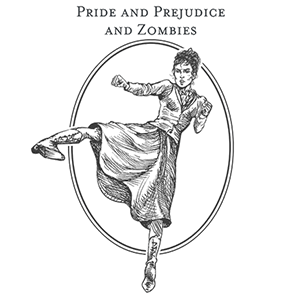
A mashup novel is a work of fiction which combines a pre-existing text, often a classic work of fiction, with a certain popular genre such as vampire or zombie narratives. ‘Pride and Prejudice and Zombies,’ which combines Jane Austen’s classic novel ‘Pride and Prejudice’ with elements of modern zombie fiction, is arguably the first, and certainly one of the most famous and successful works in the genre, and has been credited with spawning a rash of imitations. The term ‘Mashup’ was borrowed from the world of computers and music. Mashup books are seen as distinct from parody novels like ‘Bored of the Rings,’ and parallel novels like ‘The Wind Done Gone’ or ‘Wicked’ since they do not merely make fun of the original text, or tell an alternative version of it, but also introduce the themes and characteristics of a wholly different genre.
While most works in this genre (or cross-genre trend) rely on fictional texts as their basis, other works like ‘Abraham Lincoln, Vampire Hunter’ superimpose the popular genres over historical figures and events. A more recent phenomenon within the genre is the combination of more than two original works, or genres, as in the case of ‘Robinson Crusoe (The Eerie Adventures of the Lycanthrope),’ which combines the original novel with elements borrowed from the works of H.P. Lovecraft as well as the popular genre of werewolf fiction, and is accordingly attributed to three authors – Daniel Defoe, H.P. Lovecraft, and Peter Clines.
Posted in Art, Humor, Language |
Leave a Comment »
February 6, 2012

Monome is a family of interface devices for computers made by a Pennsylvania company of the same name. Despite being produced irregularly in small quantities since its introduction in 2006, the Monome button-grid controller has had a significant impact on electronic music. Together with the physically similar Yamaha Tenori-On, which was released a year later in 2007, the monome inspired interest in minimalist, grid-based music controllers. That interest spawned hobbyist projects like the Arduinome and commercial products like the Akai APC40 and the Novation Launchpad. The Monome has a minimalist design. It is simply a box with no letters or labels. There are random buttons that are back-lit. The box that holds the monome is entirely made up of timber, usually walnut. Notable users include deadmau5, Flying Lotus, Daedelus, and Nine Inch Nails contributor Alessandro Cortini.
Monome devices do not produce any sound on their own; they must be connected to a computer. A core design principle of the Monome is that it is not intended for any one specific application — the function of each button and the decision as to which lights are lit are completely up to the software communicating with the device over the Open Sound Control protocol. Several models have been produced, with typical sizes ranging from 64 to 256 buttons — plus a very limited run of 512-button devices. Monome applications span a wide variety of capabilities. Several applications provide sample sequencing capabilities. One such application is MLR, an application that allows for live sequencing and re-cutting of samples. There are also many applications that allow for synthesis either via their own internal synthesizers or by sending MIDI/OSC messages to external synthesizers.
Posted in Art, Money, Technology |
Leave a Comment »
February 6, 2012

Hugo Leclercq (b. 1994), known by his stage name Madeon, is a French electropop producer. He started composing music at the age of 11, and adopted a nu-disco style under the name Madeon in 2010. In the fall of that year, he gained popularity for his award-winning remix of ‘The Island’ by Pendulum.
In the summer of 2011, a YouTube video of his live mashup ‘Pop Culture’ went viral, which combines 39 pop hits into one song. He is known to use Novation’s Launchpad, a MIDI controlled monome, and FL Studio (FruityLoops).
Posted in Art, Technology |
Leave a Comment »



