January 10, 2013

The method of loci [loh-sahy] (plural of Latin ‘locus’ for ‘place’ or ‘location’), also called the ‘memory palace,’ is a mnemonic device introduced in ancient Roman and Greek rhetorical treatises. The items to be remembered in this mnemonic system are mentally associated with specific physical locations. It relies on memorized spatial relationships to establish, order and recollect memorial content.
The method of loci is also commonly referred to as the journey method. In basic terms, it is a method of memory enhancement which uses visualization to organize and recall information. Many memory contest champions claim to use this technique in order to recall faces, digits, and lists of words. These champions’ successes have little to do with brain structure or intelligence, but more to do with their technique of using regions of their brain that have to do with spatial learning. Those parts of the brain that contribute most significantly to this technique include the medial parietal cortex, retrosplenial cortex, and the right posterior hippocampus.
read more »
Posted in Education, Health |
1 Comment »
January 10, 2013

The Google effect is the tendency to forget information that can be easily found using internet search engines such as Google, instead of remembering it.
The phenomenon was described and named by researchers Betsy Sparrow, Jenny Liu, and Daniel M. Wegner in 2011. Having easy access to the Internet, their study showed, makes people less likely to remember certain details they believe will be accessible online. People can still remember things they cannot find online, and how to find what they need on the Internet. Sparrow said this made the Internet a type of transactive memory. One result of this phenomenon is dependence on the Internet; if an online connection is lost, the researchers said, it is similar to losing a friend.
read more »
Posted in Health, Science, Technology |
Leave a Comment »
January 10, 2013

‘Don’t be evil‘ was the formal corporate motto (or slogan) of Google. It was first suggested either by Google employee Paul Buchheit at a meeting about corporate values that took place in early 2000, or by Google Engineer Amit Patel in 1999. Buchheit, the creator of Gmail, said he ‘wanted something that, once you put it in there, would be hard to take out,’ adding that the slogan was ‘also a bit of a jab at a lot of the other companies, especially our competitors, who at the time, in our opinion, were kind of exploiting the users to some extent.’
While the official corporate philosophy of Google does not contain the words ‘Don’t be evil,’ they were included in the prospectus of Google’s 2004 IPO (a letter from Google’s founders, later called the ”Don’t Be Evil’ manifesto’): ‘Don’t be evil. We believe strongly that in the long term, we will be better served — as shareholders and in all other ways — by a company that does good things for the world even if we forgo some short term gains.’
read more »
Posted in Money, Politics, Technology |
Leave a Comment »
January 9, 2013
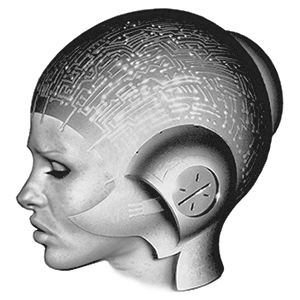
‘Burning Chrome‘ is a short story, written by William Gibson and first published in ‘Omni’ in 1982. Gibson first read the story at a science fiction convention in Denver in the autumn of 1981, to an audience of four people, among them Bruce Sterling (who Gibson later said ‘completely got it’). It was collected with the rest of Gibson’s early short fiction in a 1986 volume of the same name.
‘Burning Chrome’ tells the story of two hackers who breaking into computer systems for profit. The two main characters are Bobby Quine who specializes in software and Automatic Jack whose field is hardware. A third character in the story is Rikki, a girl with whom Bobby becomes infatuated and for whom he wants to become wealthy. Automatic Jack acquires a piece of Russian hacking software that is very sophisticated and hard to trace. The rest of the story unfolds with Bobby deciding to break into the system of a notorious and vicious criminal called Chrome, who handles money transfers for organized crime, and Automatic Jack reluctantly agreeing to help.
read more »
Posted in Art, Language, Technology |
Leave a Comment »
January 9, 2013

‘Neuromancer‘ is a 1984 novel by William Gibson, a seminal work in the cyberpunk genre and winner of the science-fiction ‘triple crown’ — the Nebula Award, the Philip K. Dick Award, and the Hugo Award. It was Gibson’s first novel and the beginning of the ‘Sprawl’ trilogy (which takes place in a near-future world dominated by corporations and ubiquitous technology, after a limited World War III).
The novel tells the story of a washed-up computer hacker hired by a mysterious employer to work on a dangerous hack. ‘Neuromancer’ is considered the archetypal cyberpunk work. Gibson himself coined the term ‘cyberspace’ in his novelette ‘Burning Chrome,’ published in 1982 by ‘Omni’ magazine.
read more »
Posted in Art, Language, Technology |
Leave a Comment »
January 9, 2013

MSTRKRFT (pronounced ‘Master-craft’) is an electronic music duo from Toronto. The group was started in 2005 by Jesse F. Keeler of Death from Above 1979 and Al-P (Alex Puodziukas) formerly of the Ontario electropop group Girlsareshort. Al-P was also the producer for Death from Above 1979’s album ‘You’re a Woman, I’m a Machine’ as well as several of (Jesse’s former band) Black Cat #13’s records.
The duo have been close friends, as well as work partners, for a long time. MSTRKRFT also produced Die Mannequin’s first EP, ‘How to Kill,’ and Magneta Lane’s second LP, ‘Dancing With Daggers.’ The band took out the vowels from their name in order to avoid trademark infringement with Mastercraft, a Canadian tools company. MSTRKRFT have been commissioned to remix songs by such artists as Death From Above 1979, Kylie Minogue, Katy Perry, Justice, Bloc Party, Ayumi Hamasaki, Metric, Wolfmother, Annie, and The Kills.
Posted in Art |
Leave a Comment »
January 9, 2013
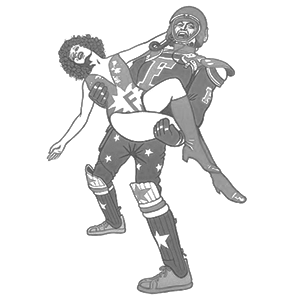
Mr. Freedom is a 1969 film by the expatriate American photographer and filmmaker William Klein. Starring the popular French actor Delphine Seyrig, this anti-imperialist satirical farce has cameos by the well-known actors Donald Pleasence and Philippe Noiret, as well as the musician Serge Gainsbourg. Under the command of Dr. Freedom, the crass superhero Mr. Freedom (John Abbey) goes to France to stave off the advances of the mysterious French Anti-Freedom (FAF) organization.
He joins forces with the femme fatale Marie-Madeleine to lead his own anti-communist Freedom organization. The Freedom mission is complicated by the machinations of communist foes — the Stalinist Moujik Man and the ferocious Maoist Red China Man (portrayed as a giant inflatable dragon). France, refusing to see the FAF as a threat, rebuffs Freedom, leading to an escalation of Cold War tactics. In the end, betrayed, Mr. Freedom destroys himself trying to save the ‘unappreciative’ nation.
read more »
Posted in Humor, Politics, World |
Leave a Comment »
January 9, 2013

Mount Kimbie is a British electronic music duo consisting of Dominic Maker and Kai Campos. They formed the group in London in 2008 and released their debut album ‘Crooks & Lovers’ in 2010 in the UK to critical acclaim. Mount Kimbie are currently working on their second album which will be released on Warp Records. Arguably responsible for the term ‘post-dubstep,’ the duo has released a series of EPs and their highly praised debut album.
‘The Guardian’ described the pair as ‘leading an exploratory breakaway from bass-heavy dubstep towards a lighter, hazier style of electronica rich with drowsy ambience and chopped-up found sounds.’ The pair are closely linked to friend, producer and ‘BBC Sound of’ 2011 runner-up, James Blake. He has collaborated with them live and lent his skills to the remixing of ‘Maybes,’ as well as contributing elements to ‘Crooks & Lovers.’
read more »
Posted in Art |
Leave a Comment »
January 9, 2013

Moulage [moo-lahzh] (French: ‘casting/moulding’) is the art of applying mock injuries for the purpose of training Emergency Response Teams and other medical and military personnel. Moulage may be as simple as applying pre-made rubber or latex ‘wounds’ to a healthy ‘patient’s’ limbs, chest, head, etc., or as complex as using complicated makeup and theater techniques to provide elements of realism (such as blood, vomitus, open fractures, etc.) to the training simulation. The practice dates to at least the Renaissance, when wax figures were used for this purpose.
The history of wax models is ancient. Wax anatomical models were first made by Gaetano Giulio Zummo (1656–1701) who first worked in Naples, then Florence, and finally Paris, where he was granted monopoly right by Louis XIV. Later, Jules Baretta (1834–1923) made more than 2000 splendid wax models in Hospital Saint-Louis, Paris. While wax models were being made, he made pleasant conversations with the patients, sang songs or at times played the piano.
Posted in Education, Health |
Leave a Comment »
January 9, 2013
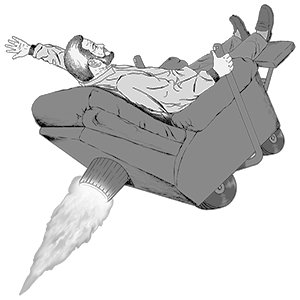
In 2009, Dennis LeRoy Anderson of Minnesota received widespread media attention for being arrested in a DWI case involving a motorized recliner. Riding a recliner which he had fitted with a motor, Anderson crashed into a car after leaving a local bar, where he had drunk a number of beers. The driver was convicted and the chair was confiscated by the police. The police auctioned the recliner away on Do-Bid.com for $3,700. 62-year-old Dennis LeRoy Anderson fitted his recliner with a lawnmower engine, wheels and steering wheel, which allowed the chair to reach up to 20 miles per hour. He had also installed a stereo, cup holders, headlights and a power antenna.
According to Minnesota law, a ‘motor vehicle’ is taken to mean ‘every vehicle that is self-propelled and every vehicle that is propelled by electric power obtained from overhead trolley wires. This means that a driver of any motorized vehicle, even a recliner, is liable under DWI legislation. Anderson’s blood alcohol content was three times over the legal limit for the state. In addition to this, vehicles can also be confiscated if the driver has a blood alcohol level over 0.2, or has a prior DWI conviction from the last 10 years. Anderson, in addition to having a blood alcohol level well over that limit, also had a prior conviction.
Posted in Humor, Politics, Technology |
Leave a Comment »
January 8, 2013

Anamanaguchi is a chiptune indie rock or ‘chip-punk’ band from New York City that ‘makes loud, fast music with a NES from 1985.’ The band has four members: lead songwriter Peter Berkman, bassist James DeVito, guitarist Ary Warnaar and drummer Luke Silas. Like other chiptune artists, Anamanaguchi creates music using synthesizers. However, unlike most chiptune bands, they use video game hardware from the mid-to-late 1980s: namely an NES and a Game Boy.
Berkman has stated that their music isn’t just based around video game music and that much of it is inspired by ‘[s]imple pop stuff, like Weezer and the Beach Boys.’ The band composed music for the videogame adaptation of the ‘Scott Pilgrim’ graphic novels, ‘Scott Pilgrim vs. the World: The Game.’ In 2010 it was announced that Anamanaguchi would appear in the popular music video game ‘Rock Band’ with the track ‘Airbrushed.’ The band’s song ‘Jetpack Blues, Sunset Hues’ is the current theme to Chris Hardwick’s ‘The Nerdist Podcast.’
Posted in Art, Games, Technology |
1 Comment »
January 8, 2013
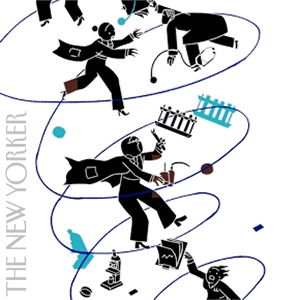
The decline effect may occur when scientific claims receive decreasing support over time. The term was first described by parapsychologist Joseph Banks Rhine in the 1930s to describe the disappearing of extrasensory perception (ESP) of psychic experiments conducted by Rhine over the course of study or time. The term was once again used in a 2010 article by Jonah Lehrer published in ‘The New Yorker.’
In his article, Lehrer gives several examples where the decline effect is allegedly showing. In the first example, the development of second generation anti-psychotic drugs, reveals that the first tests had demonstrated a dramatic decrease in the subjects’ psychiatric symptoms. However, after repeating tests this effect declined and in the end it was not possible to document that these drugs had any better effect than the first generation anti-psychotics.
read more »
Posted in Science |
Leave a Comment »


 The Daily Omnivore